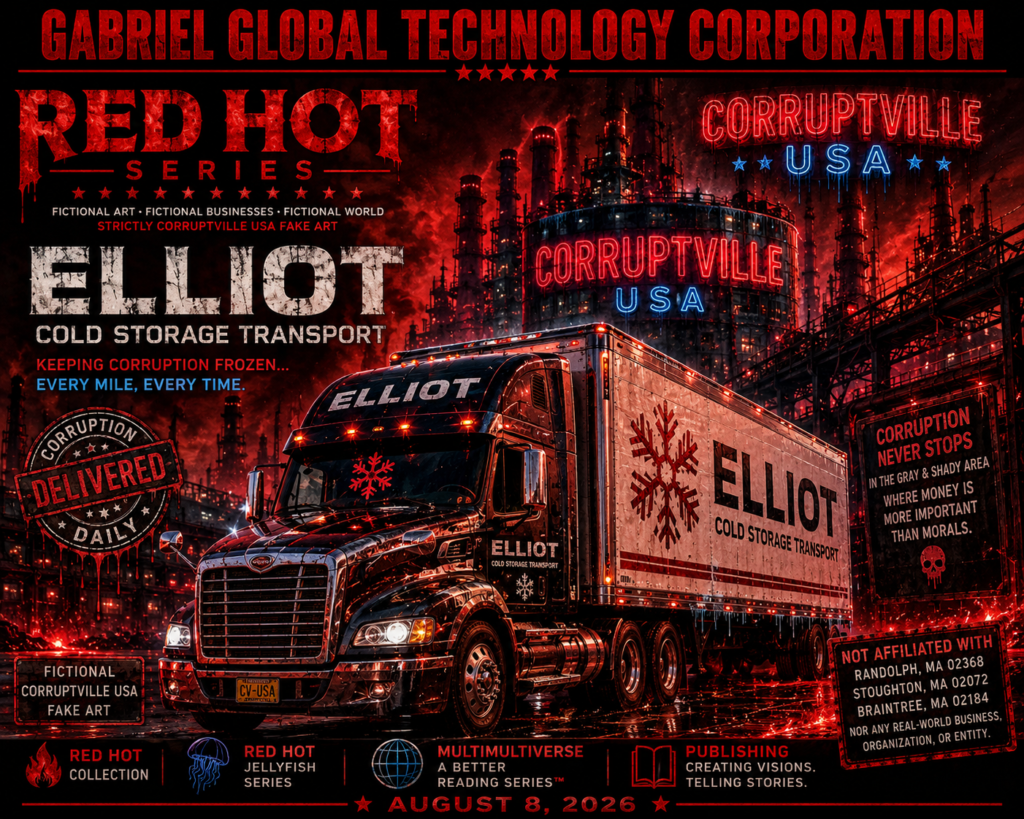
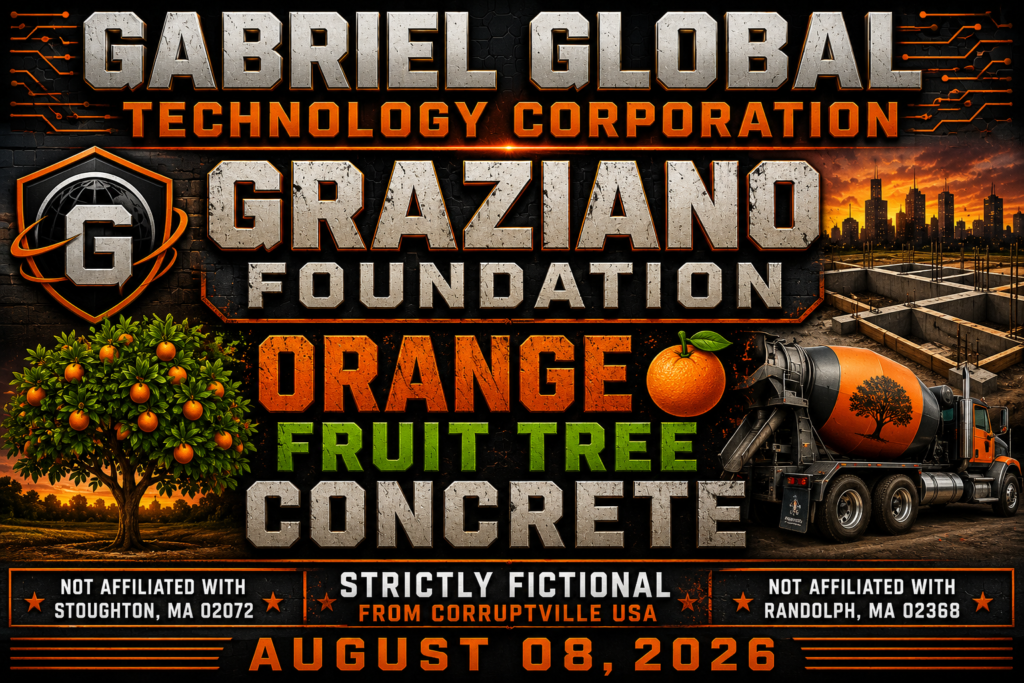
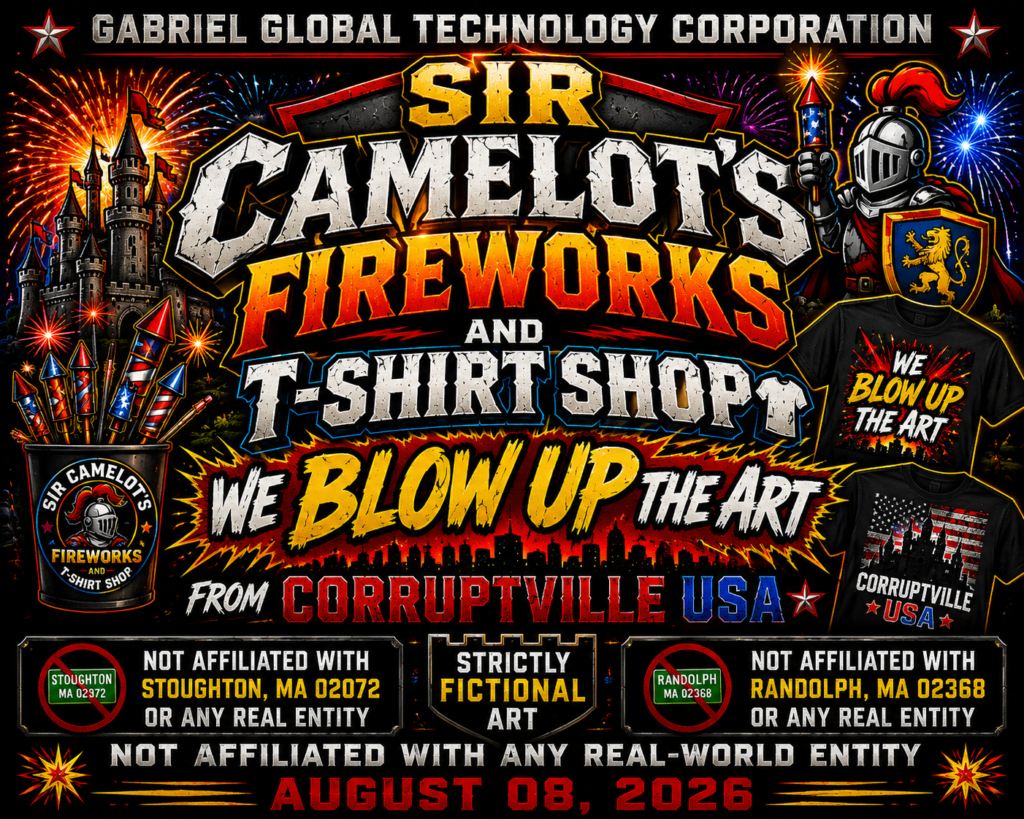
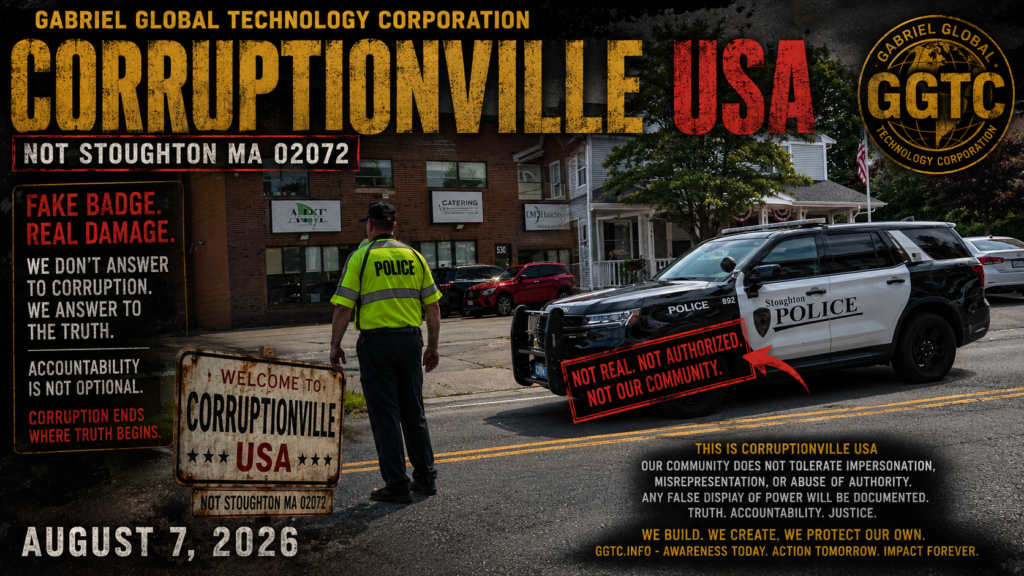
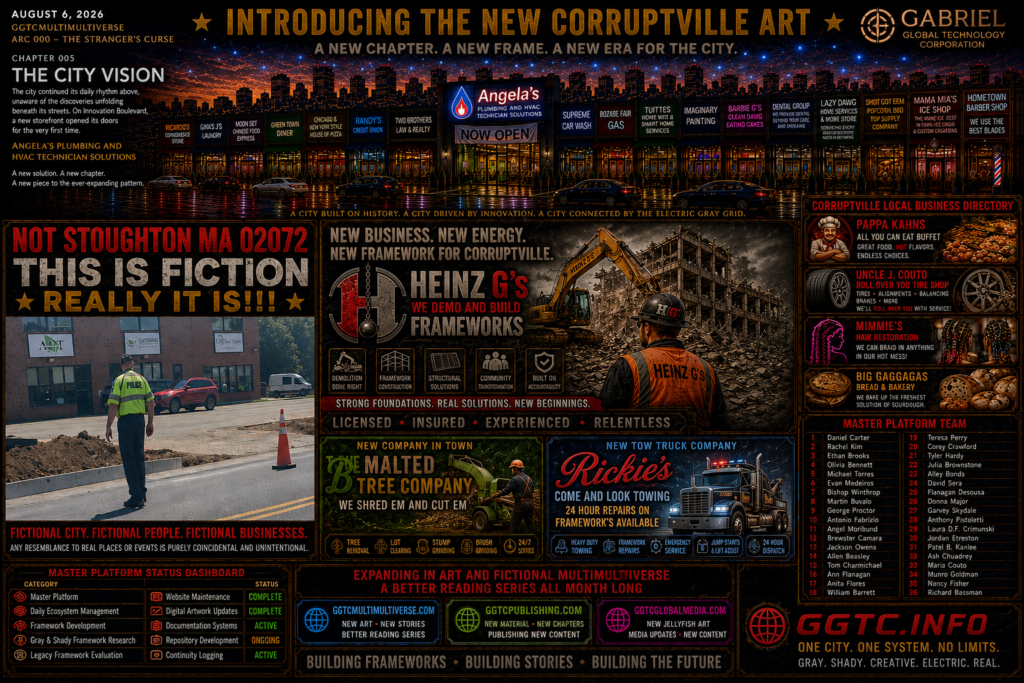
New framework systems are being developed and implemented for new environments within the current ecosystem. Development includes attempts to utilize older technologies where useful while improving performance for the current operating environment.
New artwork has been updated on:
GGTCUNIVERSE.COM
GGTCPUBLISHING.COM
GGTCGLOBALMEDIA.COM
Additional ecosystem sites are planned for updates throughout the day.
⸻
MASTER PLATFORM TEAM
#
Team Member
1
Daniel Carter
2
Rachel Kim
3
Ethan Brooks
4
Olivia Bennett
5
Michael Torres
6
Evan Medeiros
7
Bishop Winthrop
8
Martin Buvalo
9
George Proctor
10
Antonio Fabrizio
11
Angel Moribund
12
Brewster Camara
13
Jackson Owens
14
Allen Beasley
15
Tom Charmichael
16
Ann Flanagan
17
Anita Flores
18
William Barrett
19
Teresa Perry
20
Corey Crawford
21
Tyler Hardy
22
Julia Brownstone
23
Alley Bonds
24
David Sera
25
Flanagan Desousa
26
Donna Major
27
Garvey Skydale
28
Anthony Pistoletti
29
Laura D.F. Crimunski
30
Jordan Etreston
31
Patel B. Kanlee
32
Ash Chuadrey
33
Maria Couto
34
Munro Goldman
35
Nancy Fisher
36
Richard Bassman
37
George Buvalaquis
⸻
Current Record Status
Category
Status
Master Platform Team
37 Members
Framework Development
ACTIVE
New Environment Development
ACTIVE
Legacy Technology Evaluation
ACTIVE
Performance Development
ACTIVE
Digital Artwork Updates
ACTIVE
Additional Site Updates
PLANNED
Roster Status: The 37-member Master Platform Team list above supersedes the previous 36-member list for current documentation.
GABRIEL GLOBAL TECHNOLOGY CORPORATION
GGTC.info MASTER PLATFORM UPDATE
GGTC.info Date: Monday, August 3, 2026 GGTC.info Time: 21:04
⸻
MASTER PLATFORM LOGBOOK ENTRY
Prepared by: Olivia Bennett
Classification: Gabriel Global Technology Corporation Master Platform Logbook Entry
⸻
Operations Update
Daily operations continue across the Gabriel Global Technology Corporation ecosystem with ongoing platform maintenance, documentation, and framework development.
Website maintenance and GitHub repository development remain active. All active ChatGPT lanes continue to receive synchronized updates, while new artwork has been published across supported platforms. Framework development within the Gray and Shady Electric Circuit continues to expand through ongoing refinement and documentation.
The GGTCTRAINING.COM platform has received additional updates as part of the current development cycle.
⸻
Current Operations Status
Daily ecosystem maintenance active
Master Platform development continuing
Website updates in progress
GitHub repository development ongoing
ChatGPT lane synchronization active
Meta GUI packet ecosystem maintained
New artwork published across platforms
Gray and Shady Electric Circuit framework development continuing
GGTCTRAINING.COM updated
Documentation and continuity logging active
⸻
Operational Focus
Ecosystem Maintenance
Platform Development
Framework Engineering
Gray and Shady Electric Circuit Development
Website Maintenance
GitHub Repository Development
ChatGPT Documentation Lanes
Repository Organization
Documentation Management
Continuity Logging
Creative Media Development
Educational Platform Development
⸻
👥 MASTER PLATFORM TEAM MEMBERS
#
Team Member
1
Daniel Carter
2
Rachel Kim
3
Ethan Brooks
4
Olivia Bennett
5
Michael Torres
6
Evan Medeiros
7
Bishop Winthrop
8
Martin Buvalo
9
George Proctor
10
Antonio Fabrizio
11
Angel Moribund
12
Brewster Camara
13
Jackson Owens
14
Allen Beasley
15
Tom Charmichael
16
Ann Flanagan
17
Anita Flores
18
William Barrett
19
Teresa Perry
20
Corey Crawford
21
Tyler Hardy
22
Julia Brownstone
23
Alley Bonds
24
David Sera
25
Flanagan Desousa
26
Donna Major
⸻
Team Status
Category
Status
Team Status
Active
Platform Operations
Active
Framework Development
Active
Repository Development
Ongoing
Documentation
Active
Ecosystem Maintenance
Daily
⸻
Master Platform Structure
GABRIEL GLOBAL TECHNOLOGY CORPORATION_MASTER_PLATFORM
│
├── Organization
│ └── Gabriel Global Technology Corporation
│
├── Date
│
├── Time
│
├── Record_Type
│
├── Prepared_By
│
├── Operations
│
├── Master_Platform_Team
│
├── Team_Status
│
└── Classification
└── Gabriel Global Technology Corporation
└── Master Platform Logbook Entry
⸻
Record Summary
This logbook entry documents the continuation of daily operational activities across the Gabriel Global Technology Corporation Master Platform. Current work includes ecosystem maintenance, platform development, website updates, GitHub repository development, synchronized ChatGPT documentation lanes, educational platform updates, creative media production, and ongoing framework engineering supporting the Gray and Shady Electric Circuit development initiative.
⸻
Record Metadata
Field
Value
Organization
Gabriel Global Technology Corporation
Date
Monday, August 3, 2026
Time
21:04
Record Type
Master Platform Update
Prepared By
Olivia Bennett
Operations
Active
Master Platform Team
26 Members
Team Status
Active
Classification
Gabriel Global Technology Corporation Master Platform Logbook Entry
Gabriel Global Technology Corporation
GGTC.info MASTER PLATFORM UPDATE
Date: Friday, July 31, 2026 GGTC.info Time: 06:07
⸻
Logbook Entry
Prepared by: Daniel Carter
Classification: Master Platform Update
⸻
Development Update
Daily operations continue across the GGTC.info Master Platform.
Meta GUI packets continue to be deployed across all approved social media platforms, while development lanes within ChatGPT are updated to maintain synchronization throughout the ecosystem.
Frameworks within the Gray and Shady Electric Circuit continue to receive daily refinements and maintenance. Ongoing ecosystem maintenance remains active across the GGTC.info platform, supporting operational continuity, framework modernization, and infrastructure stability.
The Quibhoball.com platform has also been updated as part of the current maintenance cycle.
⸻
Current Development Status
Daily operations continuing
Meta GUI packet deployment active
Social media platform synchronization completed
ChatGPT development lane updates continuing
Gray and Shady Electric Circuit framework maintenance active
GGTC.info platform maintenance ongoing
Ecosystem-wide maintenance continuing
Quibhoball.com updated
Documentation and continuity logging active
Repository and framework development continuing
⸻
Operational Focus
Master Platform Operations
Framework Development
Gray and Shady Electric Circuit Maintenance
Meta GUI Packet Synchronization
ChatGPT Lane Updates
Social Media Platform Coordination
Website Maintenance
Ecosystem Support
GitHub Repository Development
Documentation Management
Continuity Logging
Platform Modernization
⸻
👥 MASTER PLATFORM TEAM MEMBERS
#
Team Member
1
Daniel Carter
2
Rachel Kim
3
Ethan Brooks
4
Olivia Bennett
5
Michael Torres
6
Evan Medeiros
7
Bishop Winthrop
8
Martin Buvalo
9
George Proctor
10
Antonio Fabrizio
11
Angel Moribund
12
Brewster Camara
13
Jackson Owens
14
Allen Beasley
15
Tom Charmichael
16
Ann Flanagan
17
Anita Flores
18
William Barrett
19
Teresa Perry
20
Corey Crawford
21
Tyler Hardy
22
Julia Brownstone
23
Alley Bonds
24
TBD
⸻
Record Summary
This logbook entry records the continuation of daily operational activities across the GGTC.info Master Platform. Primary efforts include Meta GUI packet deployment, synchronized ChatGPT lane updates, ongoing maintenance of the Gray and Shady Electric Circuit frameworks, ecosystem-wide platform support, website maintenance, Quibhoball.com updates, GitHub repository development, and continuity documentation supporting the ongoing evolution of the GGTC.info ecosystem.
⸻
Record Metadata
Field
Value
Record Type
Master Platform Update
Organization
Gabriel Global Technology Corporation
Classification
Daily Operations Log
Prepared By
Daniel Carter
Date
Friday, July 31, 2026
GGTC.info Time
06:07
Platform Status
Active Development
Team Members Listed
24
Gabriel Global Technology Corporation
GGTC.info MASTER PLATFORM UPDATE
Date: Wednesday, July 29, 2026 GGTC.info Time: 08:24
⸻
Logbook Entry
Prepared by: Olivia Bennett
Classification: Master Platform Update
⸻
Development Update
Daily operations continue across the GGTC.info Master Platform.
New framework systems built upon established Gray and Shady Electric Circuitarchitectures continue to be developed and refined. Framework engineering remains active as legacy structures are expanded to support evolving operational requirements across the GGTC.info ecosystem.
All approved social media platforms have been updated with the latest Meta GUI packets. ChatGPT development lanes have been synchronized, and GitHub repositories continue to receive ongoing updates to support documentation, framework development, and repository organization.
⸻
Current Development Status
Daily operations continuing
New framework system development active
Gray and Shady Electric Circuit development active
Legacy framework refinement continuing
Meta GUI packet deployment completed
Social media synchronization completed
ChatGPT lane updates completed
GitHub repository updates ongoing
Documentation and continuity logging active
Repository organization continuing
⸻
Operational Focus
Framework Development
Legacy Framework Modernization
Gray and Shady Electric Circuit Development
Current Systems Integration
Meta GUI Packet Synchronization
ChatGPT Development Lanes
GitHub Repository Development
Documentation Management
Continuity Logging
Repository Organization
Research and Development
⸻
👥 MASTER PLATFORM TEAM MEMBERS
#
Team Member
1
Daniel Carter
2
Rachel Kim
3
Ethan Brooks
4
Olivia Bennett
5
Michael Torres
6
Evan Medeiros
7
Bishop Winthrop
8
Martin Buvalo
9
George Proctor
10
Antonio Fabrizio
11
Angel Moribund
12
Brewster Camara
13
Jackson Owens
14
Allen Beasley
15
Tom Charmichael
16
Ann Flanagan
17
Anita Flores
18
William Barrett
19
Teresa Perry
20
Corey Crawford
21
Tyler Hardy
22
Julia Brownstone
23
Alley Bonds
24
TBD
⸻
Record Summary
This logbook entry documents the continuation of daily operations across the GGTC.info Master Platform. Development activities remain focused on framework engineering, modernization of legacy systems, Gray and Shady Electric Circuit development, Meta GUI packet deployment, synchronized ChatGPT development lanes, GitHub repository maintenance, documentation management, and continuity records supporting ongoing platform development.
⸻
Record Metadata
Field
Value
Record Type
Master Platform Update
Organization
Gabriel Global Technology Corporation
Classification
Daily Operations Log
Prepared By
Olivia Bennett
Date
Wednesday, July 29, 2026
GGTC.info Time
08:24
Platform Status
Active Development
Team Members Listed
24
GGTC.info MASTER PLATFORM UPDATE
Date: Monday, July 27, 2026 GGTC.info Time: 09:28
⸻
Logbook Entry
Prepared by: Michael Torres
Classification: Master Platform Update
⸻
Development Update
Daily operations continue across the GGTC.info Master Platform.
A new framework designed for analyzing current events using established legacy frameworks continues to evolve through the Gray and Shady Electric Circuit. Framework development remains active in real time as existing structures are refined, expanded, and integrated into new operational models.
New team-building initiatives and platform features continue to incorporate the latest available technologies to improve collaboration, operational efficiency, and overall performance through shared experience.
All approved social media platforms have been updated with the latest Meta GUI packets. Creative media and artwork continue to be produced for social media and the platform’s art gallery, with new logbook artwork being featured across social media posts.
⸻
Current Development Status
Daily operations continuing
Current-events framework development active
Legacy framework integration continuing
Gray and Shady Electric Circuit updates active
Real-time framework refinement in progress
Team-building initiatives expanding
Technology integration continuing
Meta GUI packet deployment completed
Social media synchronization completed
Creative media production continuing
Art gallery development active
New logbook artwork being published
Documentation and continuity logging active
⸻
Operational Focus
Framework Development
Current Events Framework Research
Legacy Framework Integration
Gray and Shady Electric Circuit Development
Team Building and Collaboration
Technology Integration
Meta GUI Packet Synchronization
Creative Media Production
Social Media Content Development
Art Gallery Development
Documentation Management
Continuity Logging
Repository Organization
Research and Development
⸻
👥 MASTER PLATFORM TEAM MEMBERS
#
Team Member
1
Daniel Carter
2
Rachel Kim
3
Ethan Brooks
4
Olivia Bennett
5
Michael Torres
6
Evan Medeiros
7
Bishop Winthrop
8
Martin Buvalo
9
George Proctor
10
Antonio Fabrizio
11
Angel Moribund
12
Brewster Camara
13
Jackson Owens
14
Allen Beasley
15
Tom Charmichael
16
Ann Flanagan
17
Anita Flores
18
William Barrett
19
Teresa Perry
20
Corey Crawford
21
Tyler Hardy
⸻
Record Summary
This logbook entry documents the continuation of daily operations across the GGTC.info Master Platform. Current activities include framework development, legacy framework integration, Gray and Shady Electric Circuit research, Meta GUI packet deployment, creative media production, social media content development, art gallery expansion, team collaboration, and continuity documentation supporting the ongoing evolution of the GGTC.info ecosystem.
Prepared For: GGTC.info Master Platform Continuity Records
⸻
Development Update
Development continues on new framing approaches for established framework systems through the Gray and Shady Electric Circuit.
Updated Meta GUI packets have been deployed across approved social media platforms while ongoing work focuses on refining framework architecture, modernizing legacy structures, and improving interoperability throughout the GGTC.info ecosystem.
Current development efforts emphasize integrating updated Meta GUI packet structures into existing framework layers while maintaining compatibility with established platform components and supporting future expansion.
⸻
Current Development Status
Framework architecture refinement continuing
Legacy framework modernization active
Gray and Shady Electric Circuit development active
Meta GUI packet integration continuing
Social media synchronization completed
Framework interoperability improvements in progress
Existing framework compatibility maintained
Repository development continuing
Documentation and continuity logging active
Future expansion planning continuing
⸻
Current Development Focus
Legacy framework modernization
Framework interoperability
Meta GUI packet integration
Current-events framework development
Documentation management
Continuity records
Repository organization
Structural refinement
Ecosystem integration
Future expansion planning
⸻
MASTER PLATFORM TEAM MEMBERS
#
Team Member
1
Daniel Carter
2
Rachel Kim
3
Ethan Brooks
4
Olivia Bennett
5
Michael Torres
6
Evan Medeiros
7
Bishop Winthrop
8
Martin Buvalo
9
George Proctor
10
Antonio Fabrizio
11
Angel Moribund
12
Brewster Camara
13
Jackson Owens
14
Allen Beasley
15
Tom Charmichael
16
Ann Flanagan
17
Anita Flores
18
William Barrett
19
Teresa Perry
20
Corey Crawford
21
Pending Board Approval
⸻
Platform Status
Category
Status
Platform Status
Active Development
Framework Architecture
Active
Legacy Modernization
Active
Meta GUI Integration
Active
Social Media Synchronization
Complete
Repository Development
Ongoing
Documentation
Active
Continuity Logging
Active
Ecosystem Integration
Active
⸻
Record Summary
This logbook entry records ongoing development activities centered on modernizing established framework systems while preserving compatibility with existing platform components. Current work includes framework architecture refinement, Meta GUI packet integration, interoperability improvements, continuity documentation, and coordinated development across the GGTC.info ecosystem.
⸻
Record Metadata
Field
Value
Record Type
Master Platform Update
Classification
Internal Master Platform Logbook Entry
Prepared By
Rachel Kim
Date
Sunday, July 26, 2026
GGTC.info Time
15:26
Platform Status
Active Development
Team Members Listed
21
GGTC.info MASTER PLATFORM UPDATE
Date: Saturday, July 25, 2026 GGTC.info Time: 20:41
⸻
Logbook Entry
Prepared by: Olivia Bennett
Classification: Master Platform Update
⸻
Development Update
Daily operations continue across the GGTC.info Master Platform.
A new framework designed for analyzing current events using established legacy frameworks continues to evolve through the Gray and Shady Electric Circuit. Framework development remains active in real time as existing structures are refined, expanded, and adapted into new operational models.
All approved social media platforms have been updated with the latest Meta GUI packets. All active ChatGPT development lanes have been synchronized, GitHub repository development continues, and new media has been created for the Current Art Gallery.
Team building and development continue with support from community members around the world. As part of the latest update, additional locations will be added as needed to support future expansion, future projects, and continued community engagement.
Development efforts also include establishing new working relationships while adapting to current administrative changes, community initiatives, and ongoing operational challenges associated with active projects.
⸻
Current Development Status
Daily operations continuing
Current-events framework development active
Legacy framework integration continuing
Gray and Shady Electric Circuit updates active
Real-time framework refinement in progress
Meta GUI packet deployment completed
ChatGPT lane synchronization completed
GitHub repository development ongoing
New media created for the Current Art Gallery
Team building and collaboration continuing
Expansion planning in progress
Community relations development continuing
Administrative coordination continuing
Documentation and continuity logging active
⸻
Operational Focus
Framework Development
Current Events Framework Research
Legacy Framework Integration
Gray and Shady Electric Circuit Development
Team Building and Collaboration
Technology Integration
Meta GUI Packet Synchronization
ChatGPT Lane Synchronization
GitHub Repository Development
Documentation Management
Continuity Logging
Repository Organization
Community Relations
Administrative Coordination
Creative Media Development
Current Art Gallery Development
⸻
Master Platform Team
#
Team Member
1
Daniel Carter
2
Rachel Kim
3
Ethan Brooks
4
Olivia Bennett
5
Michael Torres
6
Evan Medeiros
7
Bishop Winthrop
8
Martin Buvalo
9
George Proctor
10
Antonio Fabrizio
11
Angel Moribund
12
Brewster Camara
13
Jackson Owens
14
Allen Beasley
15
Tom Charmichael
16
Ann Flanagan
17
Anita Flores
18
William Barrett
19
Teresa Perry
20
Corey Crawford
21
Pending Board Approval
⸻
Record Summary
This logbook entry documents the continuation of daily operations across the GGTC.info Master Platform. Ongoing activities include framework development, current-events research, Meta GUI packet deployment, synchronized ChatGPT development lanes, GitHub repository construction, creative media production, community engagement, administrative coordination, and expansion planning as part of the platform’s structured development workflow.
⸻
Record Metadata
Field
Value
Record Type
Master Platform Update
Classification
Daily Operations Log
Prepared By
Olivia Bennett
Date
Saturday, July 25, 2026
GGTC.info Time
20:41
Team Members Listed
21
GGTC.info MASTER PLATFORM UPDATE
Date: Saturday, July 25, 2026 GGTC.info Time: 15:34
⸻
Logbook Entry
Prepared by: Olivia Bennett
Classification: Master Platform Update
⸻
Development Update
Daily operations continue across the GGTC.info Master Platform.
A new framework designed for analyzing current events using established legacy frameworks continues to evolve through the Gray and Shady Electric Circuit. Framework development remains active in real time as existing structures are refined, expanded, and adapted into new operational models.
New team-building initiatives and platform features continue to be developed, incorporating the latest available technologies to improve collaboration, operational efficiency, and overall development performance through shared experience.
⸻
Current Development Status
Daily operations continuing
Current-events framework development active
Legacy framework integration continuing
Gray and Shady Electric Circuit updates active
Real-time framework refinement in progress
Team-building initiatives expanding
New platform features under development
Technology integration continuing
Performance optimization in progress
Documentation and continuity logging active
⸻
Operational Focus
Framework Development
Current Events Framework Research
Legacy Framework Integration
Gray and Shady Electric Circuit Development
Team Building and Collaboration
Technology Integration
Performance Improvement
Documentation Management
Continuity Logging
Repository Development
Research and Development
⸻
Record Summary
This logbook entry documents the continuation of daily operations across the GGTC.info Master Platform. Current development efforts remain focused on framework evolution, technology integration, collaborative team development, operational improvements, and ongoing documentation supporting the platform’s structured development process.
⸻
Record Metadata
Field
Value
Record Type
Master Platform Update
Classification
Daily Operations Log
Prepared By
Olivia Bennett
Date
Saturday, July 25, 2026
GGTC.info Time
15:34
GGTC.info MASTER 7 UPDATE
Date: Friday, July 24, 2026 GGTC.info Time: 20:36
⸻
Logbook Entry
Prepared by: Michael Torres
⸻
Development Update
A new framework designed for analyzing current events using established legacy frameworks continues to evolve through the Gray and Shady Electric Circuit.
Framework development remains active in real time as existing structures are refined, expanded, and integrated into new operational models. All approved social media platforms have been updated with Meta GUI packets. All ChatGPT development lanes have been updated, GitHub repository development continues, and the New Media for the Future Art Gallery has been established.
Team building and development continue with support from community members throughout the world. As part of the latest update, additional locations will be added as needed to support future expansion, upcoming projects, and continued community relations.
⸻
Current Development Status
Current-events framework development active
Legacy framework integration continuing
Gray and Shady Electric Circuit updates active
Real-time framework refinement in progress
Meta GUI packet deployment completed
ChatGPT lane synchronization completed
GitHub repository development ongoing
New Media for the Future Art Gallery established
Team development and collaboration continuing
Expansion planning in progress
Community relations development continuing
Documentation and continuity logging active
⸻
Master 7 Team
#
Team Member
1
Daniel Carter
2
Rachel Kim
3
Ethan Brooks
4
Olivia Bennett
5
Michael Torres
6
Evan Medeiros
7
Bishop Winthrop
8
Martin Buvalo
9
George Proctor
10
Antonio Fabrizio
11
Angel Moribund
12
Brewster Camara
13
Jackson Owens
14
Allen Beasley
15
Tom Charmichael
16
Ann Flanagan
17
Anita Flores
18
William Barrett
19
Teresa Perry
20
Corey Crawford
21
Pending Board Approval
⸻
Operational Focus
Framework Development
Current Events Framework Research
Legacy Framework Integration
Gray and Shady Electric Circuit Development
Repository Organization
Documentation Management
Continuity Logging
Meta GUI Packet Synchronization
ChatGPT Lane Synchronization
GitHub Repository Development
Archive Preservation
Community Relations
Publishing Support
Creative Media Development
New Media for the Future Art Gallery
⸻
Record Summary
This logbook entry documents the continued development of current-events framework architectures using established legacy framework models. Documentation, repository organization, continuity logging, Meta GUI packet synchronization, ChatGPT lane updates, GitHub repository development, community outreach, and expansion of the New Media for the Future Art Galleryremain active components of the GGTC.info Master 7 development workflow.
⸻
Record Metadata
Field
Value
Record Type
Master 7 Update
Classification
Framework Development Log
Prepared By
Michael Torres
Date
Friday, July 24, 2026
GGTC.info Time
20:36
Team Members Listed
21
GGTC.info MASTER PLATFORM UPDATE
Date: Friday, July 24, 2026 GGTC.info Time: 16:51
⸻
Logbook Entry
Prepared by: Daniel Carter
⸻
Development Update
A new framework designed for analyzing current events using established legacy frameworks continues to evolve through the Gray and Shady Electric Circuit.
Framework development remains active in real time as existing structures are refined, expanded, and integrated into new operational models. All approved social media platforms have been updated with Meta GUI packets. All ChatGPT development lanes have been updated, GitHub repository development continues, and the New Media for the Future Art Gallery has been created.
Team building and development continue with support from community members around the world. As part of the latest platform update, additional locations will be added as needed to support future expansion and upcoming projects.
For project inquiries, contact operations@GGTC.info.
⸻
Current Development Status
Current-events framework development active
Legacy framework integration continuing
Gray and Shady Electric Circuit updates active
Real-time framework refinement in progress
Meta GUI packet deployment completed
ChatGPT lane synchronization completed
GitHub repository development ongoing
New Media for the Future Art Gallery established
Team development and collaboration continuing
Expansion planning in progress
Documentation and continuity logging active
⸻
Master Platform Team
#
Team Member
1
Daniel Carter
2
Rachel Kim
3
Ethan Brooks
4
Olivia Bennett
5
Michael Torres
6
Evan Medeiros
7
Bishop Winthrop
8
Martin Buvalo
9
George Proctor
10
Antonio Fabrizio
11
Angel Moribund
12
Brewster Camara
13
Jackson Owens
14
Allen Beasley
15
Tom Charmichael
16
Ann Flanagan
17
Anita Flores
18
William Barrett
19
Teresa Perry
20
Corey Crawford
21
Pending Board Approval
GGTC.info MASTER PLATFORM UPDATE
Date: Friday, July 24, 2026 GGTC.info Time: 13:45
⸻
Logbook Entry
Prepared by: Daniel Carter
⸻
Development Update
A new framework designed for analyzing current events using established legacy frameworks continues to evolve through the Gray and Shady Electric Circuit.
Framework development remains active in real time as existing structures are refined, expanded, and integrated into new operational models. All approved social media platforms have been updated with Meta GUI packets. All ChatGPT development lanes have been updated, GitHub repository development continues, and the New Media for the Future Art Gallery has been created.
Team building and development are underway with the support of team members and contributors throughout the global community as part of the latest project update.
A new framework designed for analyzing current events using established legacy frameworks continues to evolve through the Gray and Shady Electric Circuit.
Framework development remains active in real time as existing structures are refined, expanded, and integrated into new operational models. Meta GUI packet updates have been applied across approved social media platforms. ChatGPT development lanes remain synchronized, GitHub repository construction continues, and the New Media for the Future Art Gallery has been established.
⸻
Current Development Status
Current-events framework development active
Legacy framework integration continuing
Gray and Shady Electric Circuit updates active
Real-time framework refinement in progress
Meta GUI packet deployment completed across approved social media platforms
ChatGPT lane synchronization completed
GitHub repository development ongoing
New Media for the Future Art Gallery established
Documentation and continuity logging continuing
⸻
Master Platform Team
#
Team Member
1
Daniel Carter
2
Rachel Kim
3
Ethan Brooks
4
Olivia Bennett
5
Michael Torres
6
Evan Medeiros
7
Bishop Winthrop
8
Martin Buvalo
9
George Proctor
10
Antonio Fabrizio
11
Angel Moribund
12
Brewster Camara
13
Jackson Owens
14
Allen Beasley
15
Tom Charmichael
16
Ann Flanagan
17
Anita Flores
18
William Barrett
19
Teresa Perry
20
Corey Crawford
⸻
Operational Focus
Framework Development
Current Events Framework Research
Legacy Framework Integration
Gray and Shady Electric Circuit Development
Repository Organization
Documentation Management
Continuity Logging
Meta GUI Packet Synchronization
ChatGPT Lane Synchronization
GitHub Repository Development
Archive Preservation
Publishing Support
Creative Media Development
New Media for the Future Art Gallery
⸻
Record Summary
This logbook entry documents the continuing development of current-events framework architectures using established legacy framework models. Documentation, repository organization, continuity logging, Meta GUI packet synchronization, ChatGPT lane updates, GitHub repository development, and expansion of the New Media for the Future Art Gallery remain active components of the GGTC.info Master Platform development workflow.
⸻
Record Metadata
Field
Value
Record Type
Master Platform Update
Classification
Framework Development Log
Prepared By
Olivia Bennett
Date
Friday, July 24, 2026
GGTC.info Time
09:14
Team Members Listed
20
⸻
Recorded By: Olivia Bennett
Date: Friday, July 24, 2026 GGTC.info Time: 09:14
⸻
GGTC.info — Structured Systems. Global Learning. Continuous Development.
GGTC.info | GGTC Corporation — All Rights Reserved | JP Johnson Publishing
GGTC.INFO MASTER PLATFORM UPDATE
Date: Friday, July 24, 2026 GGTC.info Time: 04:30
⸻
Logbook Entry
Prepared by: Daniel Carter Classification: Master Platform Update
⸻
Development Update
A new framework designed to analyze current events using established framework architectures continues to evolve through the Gray and Shady Electric Circuit.
Framework development remains active in real time as existing framework models are refined, expanded, and adapted into new structural variants. Documentation, continuity, and repository development continue across the ecosystem.
Current Development Status
Current-events framework under active development
Legacy framework integration continuing
Gray and Shady Electric Circuit updates active
Real-time framework refinement in progress
Repository documentation expanding
Continuity logging active
Framework synchronization continuing
Research and development ongoing
New framework variants under evaluation
⸻
Meta GUI Packet Update
All approved social media platforms have been updated with the latest Meta GUI packets.
Approved Social Platforms
TikTok: Quibhoball
X (Twitter): GGTC_operations
Instagram: operations_ggtc.info
Facebook: GGTC.info Ecosystem
⸻
ChatGPT & GitHub Development
Development continues across all active ChatGPT lanes.
Current Activities
Framework construction
Repository organization
Documentation management
GitHub repository development
Continuity logging
Archive preservation
Framework synchronization
Ongoing structural refinement
GitHub repository development remains an ongoing activity supporting the documentation and framework ecosystem.
⸻
Creative Development
New Media for the Future Art Gallery
The New Media for the Future Art Gallerycontinues as a creative initiative supporting future media concepts, digital artwork, documentation, and archival presentation.
Development of the gallery continues alongside the broader framework, publishing, and repository ecosystem.
⸻
GGTC.INFO MASTER PLATFORM TEAM
#
Team Member
1
Daniel Carter
2
Rachel Kim
3
Ethan Brooks
4
Olivia Bennett
5
Michael Torres
6
Evan Medeiros
7
Bishop Winthrop
8
Martin Buvalo
9
George Proctor
10
Antonio Fabrizio
11
Angel Moribund
12
Brewster Camara
13
Jackson Owens
14
Allen Beasley
15
Tom Charmichael
16
Ann Flanagan
17
Anita Flores
18
William Barrett
19
Teresa Perry
20
Corey Crawford
⸻
Operational Focus
Framework Development
Current Events Framework Research
Gray and Shady Electric Circuit Development
Repository Organization
Documentation Management
Continuity Logging
Meta GUI Packet Synchronization
ChatGPT Lane Synchronization
GitHub Repository Development
Archive Preservation
Publishing Support
Creative Media Development
New Media for the Future Art Gallery
⸻
Record Summary
This logbook entry documents continuing development of current-events framework architectures using established framework models. Documentation, repository organization, continuity logging, Meta GUI packet synchronization, updates across ChatGPT development lanes, ongoing GitHub repository development, and continued expansion of the New Media for the Future Art Gallery remain active components of the GGTC.info Master Platform development workflow.
A new framework has been documented for analyzing current events by applying established framework methodologies within the Gray and Shady Electric Circuit model.
Framework development continues in real time through ongoing refinement of existing structures, evaluation of new framework variants, and expansion of continuity documentation.
All approved social media platforms have been updated with the latest Meta GUI packets. All active ChatGPT documentation lanes have been synchronized, and GitHub repository development continues as part of the ongoing documentation and framework management process.
A new Media for the Future Art Gallery has also been established as part of the current development cycle.
⸻
🎯 CURRENT DEVELOPMENT OBJECTIVES
Apply established frameworks to current-event analysis
Expand the Gray and Shady Electric Circuit framework
Develop and evaluate new framework variants
Document framework development in real time
Synchronize approved social media platforms using Meta GUI packets
Maintain active ChatGPT documentation lanes
Continue GitHub repository development
Develop and organize the Media for the Future Art Gallery
⸻
📊 DEVELOPMENT STATUS
Category
Status
Master Platform
ACTIVE
Framework Development
ACTIVE
Gray & Shady Electric Circuit
ACTIVE
Meta GUI Packet Deployment
COMPLETE
Social Media Platform Updates
COMPLETE
ChatGPT Lane Synchronization
COMPLETE
GitHub Repository Development
ONGOING
Media for the Future Art Gallery
CREATED
Documentation
ACTIVE
Research
ACTIVE
Continuity Logging
ACTIVE
⸻
👥 MASTER PLATFORM TEAM MEMBERS
#
Team Member
1
Daniel Carter
2
Rachel Kim
3
Ethan Brooks
4
Olivia Bennett
5
Michael Torres
6
Evan Medeiros
7
Bishop Winthrop
8
Martin Buvalo
9
George Proctor
10
Antonio Fabrizio
11
Angel Moribund
12
Brewster Camara
13
Jackson Owens
14
Allen Beasley
15
Tom Charmichael
16
Ann Flanagan
17
Anita Flores
18
William Barrett
19
Teresa Perry
20
Corey Crawford
⸻
📚 DEVELOPMENT SUMMARY
Current development activities continue to expand the GGTC.info Master Platform framework library through structured analysis, framework refinement, and real-time documentation. Communication channels have been synchronized with the latest Meta GUI packets, ChatGPT documentation lanes remain current, GitHub repository development is ongoing, and the Media for the Future Art Gallery has been added to the development portfolio.
⸻
📌 RECORD METADATA
Field
Value
Record Type
Master Platform Update
Date
Friday, July 24, 2026
GGTC.info Time
04:17
Prepared By
Daniel Carter
Team Members Listed
20
Classification
Framework Development Log
⸻
📌 END OF LOGBOOK ENTRY
GGTC.INFO MASTER PLATFORM
Date: Friday, July 24, 2026 GGTC.info Time: 04:17
🌍 GGTC.INFO MASTER PLATFORM UPDATE
Date: Friday, July 24, 2026 GGTC.info Time: 02:29
⸻
📘 LOGBOOK ENTRY
Prepared by: Ethan Brooks
⸻
📝 DEVELOPMENT UPDATE
A new framework has been documented for analyzing current events by applying established framework methodologies within the Gray and Shady Electric Circuit model.
Framework development continues in real time through ongoing refinement of existing structures, evaluation of new framework variants, and expansion of continuity documentation.
All approved social media platforms have been updated with the latest GUI Meta packets, and all active ChatGPT documentation lanes have been synchronized to reflect the current development cycle.
⸻
🎯 CURRENT DEVELOPMENT OBJECTIVES
Apply established frameworks to current-event analysis
Expand the Gray and Shady Electric Circuit framework
Develop and evaluate new framework variants
Document framework development in real time
Maintain continuity and research records
Synchronize approved social media platforms with GUI Meta packet updates
Update active ChatGPT documentation lanes
⸻
📊 DEVELOPMENT STATUS
Category
Status
Master Platform
ACTIVE
Framework Development
ACTIVE
Gray & Shady Electric Circuit
ACTIVE
GUI Meta Packet Deployment
COMPLETE
Social Media Platform Updates
COMPLETE
ChatGPT Lane Synchronization
COMPLETE
Documentation
ACTIVE
Research
ACTIVE
Continuity Logging
ACTIVE
⸻
👥 MASTER PLATFORM TEAM MEMBERS
#
Team Member
1
Daniel Carter
2
Rachel Kim
3
Ethan Brooks
4
Olivia Bennett
5
Michael Torres
6
Evan Medeiros
7
Bishop Winthrop
8
Martin Buvalo
9
George Proctor
10
Antonio Fabrizio
11
Angel Moribund
12
Brewster Camara
13
Jackson Owens
14
Allen Beasley
15
Tom Charmichael
16
Ann Flanagan
17
Anita Flores
18
William Barrett
19
Teresa Perry
20
Corey Crawford
⸻
📚 DEVELOPMENT SUMMARY
Current development activities continue to expand the GGTC.info Master Platform framework library through structured analysis, framework refinement, real-time documentation, and coordinated communication updates. Approved social media platforms have been synchronized with the latest GUI Meta packets, and active ChatGPT documentation lanes have been updated to support the current development cycle.
⸻
📌 RECORD METADATA
Field
Value
Record Type
Master Platform Update
Date
Friday, July 24, 2026
GGTC.info Time
02:29
Prepared By
Ethan Brooks
Team Members Listed
20
Classification
Framework Development Log
⸻
📌 END OF LOGBOOK ENTRY
GGTC.INFO MASTER PLATFORM
Date: Friday, July 24, 2026 GGTC.info Time: 02:29
🌍 GGTC.INFO MASTER PLATFORM UPDATE
Date: Friday, July 24, 2026 GGTC.info Time: 02:01
⸻
📘 LOGBOOK ENTRY
Prepared by: Ethan Brooks
⸻
📝 DEVELOPMENT UPDATE
A new framework has been documented for analyzing current events by applying established framework methodologies within the Gray and Shady Electric Circuit model.
Framework development continues in real time through ongoing refinement of existing structures, evaluation of new framework variants, and expansion of continuity documentation.
All approved social media platforms have been updated with the latest GUI Meta packets, and all active ChatGPT documentation lanes have been synchronized to reflect the current development cycle.
⸻
🎯 CURRENT DEVELOPMENT OBJECTIVES
Apply established frameworks to current-event analysis
Expand the Gray and Shady Electric Circuit framework
Develop and evaluate new framework variants
Document framework development in real time
Maintain continuity and research records
Synchronize approved social media platforms with GUI Meta packet updates
Update active ChatGPT documentation lanes
⸻
📊 DEVELOPMENT STATUS
Category
Status
Master Platform
ACTIVE
Framework Development
ACTIVE
Gray & Shady Electric Circuit
ACTIVE
GUI Meta Packet Deployment
COMPLETE
Social Media Platform Updates
COMPLETE
ChatGPT Lane Synchronization
COMPLETE
Documentation
ACTIVE
Research
ACTIVE
Continuity Logging
ACTIVE
⸻
👥 MASTER PLATFORM TEAM MEMBERS
#
Team Member
1
Daniel Carter
2
Rachel Kim
3
Ethan Brooks
4
Olivia Bennett
5
Michael Torres
6
Evan Medeiros
7
Bishop Winthrop
8
Martin Buvalo
9
George Proctor
10
Antonio Fabrizio
11
Angel Moribund
12
Brewster Camara
13
Jackson Owens
14
Allen Beasley
15
Tom Charmichael
16
Ann Flanagan
17
Anita Flores
18
William Barrett
19
Teresa Perry
20
Corey Crawford
⸻
📚 DEVELOPMENT SUMMARY
Current development activities continue to expand the GGTC.info Master Platform framework library through structured analysis, framework refinement, real-time documentation, and coordinated communication updates. Approved social media platforms have been synchronized with the latest GUI Meta packets, and active ChatGPT documentation lanes have been updated to align with the current development cycle.
⸻
📌 RECORD METADATA
Field
Value
Record Type
Master Platform Update
Date
Friday, July 24, 2026
GGTC.info Time
02:01
Prepared By
Ethan Brooks
Team Members Listed
20
Classification
Framework Development Log
⸻
📌 END OF LOGBOOK ENTRY
GGTC.INFO MASTER PLATFORM
Date: Friday, July 24, 2026 GGTC.info Time: 02:01
🌍 GGTC.INFO MASTER PLATFORM UPDATE
Date: Thursday, July 23, 2026 GGTC.info Time: 18:39
⸻
📘 LOGBOOK ENTRY
Prepared by: Rachel Kim
⸻
📝 DEVELOPMENT UPDATE
A new framework has been documented for analyzing current events by applying previously established framework methodologies within the Gray and Shady Electric Circuit model.
Framework updates continue to be developed in real time through ongoing refinement of existing structures, evaluation of new framework variants, and expansion of continuity documentation.
All approved social media platforms have been updated with the latest GUI Meta packets to maintain synchronization across the GGTC.info Master Platform communications.
⸻
🎯 CURRENT DEVELOPMENT OBJECTIVES
Apply established frameworks to current-event analysis
Expand the Gray and Shady Electric Circuit framework
Develop and evaluate new framework variants
Record development activities in real time
Maintain continuity and research documentation
Synchronize approved social media platforms with GUI Meta packet updates
⸻
📊 DEVELOPMENT STATUS
Category
Status
Master Platform
ACTIVE
Framework Development
ACTIVE
Gray & Shady Electric Circuit
ACTIVE
GUI Meta Packet Deployment
COMPLETE
Social Media Platform Updates
COMPLETE
Documentation
ACTIVE
Research
ACTIVE
Continuity Logging
ACTIVE
⸻
👥 MASTER PLATFORM TEAM MEMBERS
#
Team Member
1
Daniel Carter
2
Rachel Kim
3
Ethan Brooks
4
Olivia Bennett
5
Michael Torres
6
Evan Medeiros
7
Bishop Winthrop
8
Martin Buvalo
9
George Proctor
10
Antonio Fabrizio
11
Angel Moribund
12
Brewster Camara
13
Jackson Owens
14
Allen Beasley
15
Tom Charmichael
16
Ann Flanagan
17
Anita Flores
18
William Barrett
19
Teresa Perry
20
Corey Crawford
⸻
📚 DEVELOPMENT SUMMARY
Current development activities continue to expand the GGTC.info Master Platform framework library through structured analysis, framework refinement, real-time documentation, and coordinated communication updates across approved social media channels.
⸻
📌 RECORD METADATA
Field
Value
Record Type
Master Platform Update
Date
Thursday, July 23, 2026
GGTC.info Time
18:39
Prepared By
Rachel Kim
Team Members Listed
20
Classification
Framework Development Log
⸻
📌 END OF LOGBOOK ENTRY
GGTC.INFO MASTER PLATFORM
Date: Thursday, July 23, 2026 GGTC.info Time: 18:39
🌍 GGTC.INFO MASTER PLATFORM UPDATE
Date: Thursday, July 23, 2026 GGTC.info Time: 14:51
⸻
📘 LOGBOOK ENTRY
Prepared by: Rachel Kim
⸻
📝 DEVELOPMENT UPDATE
A new framework has been developed for analyzing current events by applying established framework methodologies within the Gray and Shady Electric Circuit model.
Framework updates continue to be developed in real time through ongoing refinement of existing structures, evaluation of new framework variants, and expansion of continuity documentation.
All approved social media platforms have been updated with the latest GUI Meta packets to maintain synchronization across the GGTC.info Master Platform communication network.
⸻
🎯 CURRENT DEVELOPMENT OBJECTIVES
Apply established frameworks to current-event analysis
Expand the Gray and Shady Electric Circuit framework
Develop and evaluate new framework variants
Document framework development in real time
Maintain continuity and research records
Synchronize approved social media platforms with GUI Meta packet updates
⸻
📊 DEVELOPMENT STATUS
Category
Status
Master Platform
ACTIVE
Framework Development
ACTIVE
Gray & Shady Electric Circuit
ACTIVE
GUI Meta Packet Deployment
COMPLETE
Social Media Platform Updates
COMPLETE
Documentation
ACTIVE
Research
ACTIVE
Continuity Logging
ACTIVE
⸻
👥 MASTER PLATFORM TEAM MEMBERS
#
Team Member
1
Daniel Carter
2
Rachel Kim
3
Ethan Brooks
4
Olivia Bennett
5
Michael Torres
6
Evan Medeiros
7
Bishop Winthrop
8
Martin Buvalo
9
George Proctor
10
Antonio Fabrizio
11
Angel Moribund
12
Brewster Camara
13
Jackson Owens
14
Allen Beasley
15
Tom Charmichael
16
Ann Flanagan
17
Anita Flores
18
William Barrett
19
Teresa Perry
20
Corey Crawford
⸻
📚 DEVELOPMENT SUMMARY
Current development activities continue to expand the GGTC.info Master Platform framework library through structured analysis, real-time documentation, framework refinement, and coordinated communication updates across approved social media channels.
⸻
📌 RECORD METADATA
Field
Value
Record Type
Master Platform Update
Date
Thursday, July 23, 2026
GGTC.info Time
14:51
Prepared By
Rachel Kim
Team Members Listed
20
Classification
Framework Development Log
⸻
📌 END OF LOGBOOK ENTRY
GGTC.INFO MASTER PLATFORM
Date: Thursday, July 23, 2026 GGTC.info Time: 14:51
🌍 GGTC.INFO MASTER PLATFORM UPDATE
Date: Thursday, July 23, 2026 GGTC.info Time: 14:29
⸻
📘 LOGBOOK ENTRY
Prepared by: Daniel Carter
⸻
📝 DEVELOPMENT UPDATE
A new framework has been developed for analyzing current events by applying established framework methodologies within the Gray and Shady Electric Circuit model.
Framework development continues in real time, with ongoing refinement of existing structures, evaluation of new framework variants, and expansion of documentation for continuity and future development.
All approved social media platforms have been updated with the latest GUI Meta packets to maintain synchronization across the GGTC.info Master Platform communications.
⸻
🎯 CURRENT DEVELOPMENT OBJECTIVES
Apply established frameworks to current events
Expand the Gray and Shady Electric Circuit framework
Develop and evaluate new framework variants
Document development activities in real time
Maintain continuity and research records
Synchronize approved social media platforms using GUI Meta packet updates
⸻
📊 DEVELOPMENT STATUS
Category
Status
Master Platform
ACTIVE
Framework Development
ACTIVE
Gray & Shady Electric Circuit
ACTIVE
GUI Meta Packet Deployment
COMPLETE
Social Media Synchronization
COMPLETE
Documentation
ACTIVE
Research
ACTIVE
Continuity Logging
ACTIVE
⸻
👥 MASTER PLATFORM TEAM MEMBERS
#
Team Member
1
Daniel Carter
2
Rachel Kim
3
Ethan Brooks
4
Olivia Bennett
5
Michael Torres
6
Evan Medeiros
7
Bishop Winthrop
8
Martin Buvalo
9
George Proctor
10
Antonio Fabrizio
11
Angel Moribund
12
Brewster Camara
13
Jackson Owens
14
Allen Beasley
15
Tom Charmichael
16
Ann Flanagan
17
Anita Flores
18
William Barrett
19
Teresa Perry
20
Corey Crawford
⸻
📚 DEVELOPMENT SUMMARY
Current development activities continue to expand the Master Platform framework library by adapting established analytical models to current events. Real-time documentation, continuity logging, framework refinement, and communication synchronization remain ongoing priorities.
⸻
📌 RECORD METADATA
Field
Value
Record Type
Master Platform Update
Date
Thursday, July 23, 2026
GGTC.info Time
14:29
Prepared By
Daniel Carter
Team Members Listed
20
Classification
Framework Development Log
⸻
📌 END OF LOGBOOK ENTRY
GGTC.INFO MASTER PLATFORM
Date: Thursday, July 23, 2026 GGTC.info Time: 14:29
🌍 GGTC.INFO MASTER PLATFORM UPDATE
Date: Thursday, July 23, 2026 GGTC.info Time: 10:29
⸻
📘 LOGBOOK ENTRY
Prepared by: Michael Torres
⸻
📝 DEVELOPMENT SUMMARY
A new framework has been developed for analyzing current events by applying established framework methodologies within the Gray and Shady Electric Circuit model.
Framework updates continue to be developed and documented in real time as new structural variants are evaluated and incorporated into the ongoing development process.
All approved social media platforms have been updated with the latest GUI Meta packets as part of the current communications and documentation workflow.
⸻
🎯 CURRENT DEVELOPMENT OBJECTIVES
Apply established frameworks to current events
Expand the Gray and Shady Electric Circuit framework
Develop and evaluate new framework variants
Document development activities in real time
Maintain continuity and research documentation
Synchronize approved social media platforms with GUI Meta packet updates
⸻
📊 DEVELOPMENT STATUS
Category
Status
Master Platform
ACTIVE
Framework Development
ACTIVE
Gray & Shady Electric Circuit
ACTIVE
GUI Meta Packet Deployment
COMPLETE
Social Media Updates
COMPLETE
Documentation
ACTIVE
Research
ACTIVE
Continuity Logging
ACTIVE
⸻
👥 MASTER PLATFORM TEAM MEMBERS
#
Team Member
1
Daniel Carter
2
Rachel Kim
3
Ethan Brooks
4
Olivia Bennett
5
Michael Torres
6
Evan Medeiros
7
Bishop Winthrop
8
Martin Buvalo
9
George Proctor
10
Antonio Fabrizio
11
Angel Moribund
12
Brewster Camara
13
Jackson Owens
14
Allen Beasley
15
Tom Charmichael
16
Ann Flanagan
17
Anita Flores
18
William Barrett
19
Teresa Perry
20
Corey Crawford
⸻
📚 DEVELOPMENT SUMMARY
Current development activities continue to expand framework documentation by adapting established models to current-event analysis. Framework refinement, documentation, continuity records, and approved communication updates remain ongoing components of the development process.
⸻
📌 RECORD METADATA
Field
Value
Record Type
Master Platform Update
Date
Thursday, July 23, 2026
GGTC.info Time
10:29
Prepared By
Michael Torres
Team Members Listed
20
Classification
Framework Development Log
⸻
📌 END OF LOGBOOK ENTRY
GGTC.INFO MASTER PLATFORM
Date: Thursday, July 23, 2026 GGTC.info Time: 10:29
🌍 GGTC.INFO MASTER PLATFORM UPDATE
Date: Wednesday, July 22, 2026 GGTC.info Time: 18:19
⸻
📘 LOGBOOK ENTRY
Prepared by: Daniel Carter
⸻
📝 FRAMEWORK DEVELOPMENT UPDATE
A new framework has been developed for analyzing current events by adapting previously established framework structures within the Gray and Shady Electric Circuitconceptual model.
Development activities are continuing in real time, with ongoing refinement of existing framework architectures, evaluation of new structural variants, and documentation of research observations for future reference.
⸻
🎯 CURRENT DEVELOPMENT OBJECTIVES
Apply established frameworks to current events
Expand the Gray and Shady Electric Circuit model
Develop and evaluate new framework variants
Record real-time development observations
Preserve documentation for continuity and future research
⸻
📊 DEVELOPMENT STATUS
Category
Status
Master Platform
ACTIVE
Framework Development
ACTIVE
Real-Time Updates
ACTIVE
Documentation
ACTIVE
Research
ACTIVE
Continuity Logging
ACTIVE
⸻
📚 DEVELOPMENT SUMMARY
Current work focuses on extending previously developed framework models into new analytical structures. Framework updates continue to be documented as they are developed, providing a continuous record of design, evaluation, and refinement activities.
⸻
📌 RECORD METADATA
Field
Value
Record Type
Master Platform Update
Date
Wednesday, July 22, 2026
GGTC.info Time
18:19
Prepared By
Daniel Carter
Classification
Framework Development Log
⸻
📌 END OF LOGBOOK ENTRY
GGTC.INFO MASTER PLATFORM
Date: Wednesday, July 22, 2026 GGTC.info Time: 18:19
🌍 GGTC.INFO MASTER PLATFORM UPDATE
Date: Wednesday, July 22, 2026 GGTC.info Time: 05:53
⸻
📘 LOGBOOK ENTRY
Prepared by: Rachel Kim
⸻
📝 FRAMEWORK DEVELOPMENT UPDATE
A new framework has been documented that applies established framework structures to the analysis of current events through the Gray and Shady Electric Circuit conceptual model.
The ongoing objective is to examine contemporary topics by adapting previously developed framework architectures, evaluating new structural variants, and expanding the documentation library for future research and development.
⸻
📊 DEVELOPMENT STATUS
Category
Status
Master Platform
ACTIVE
Framework Development
ACTIVE
Documentation
ACTIVE
Research
ACTIVE
Continuity Logging
ACTIVE
⸻
🧩 CURRENT DEVELOPMENT FOCUS
Applying legacy framework structures to current events
Expanding Gray and Shady Electric Circuit models
Evaluating new framework variants
Continuing documentation and continuity records
Preserving research for future development
⸻
📌 RECORD METADATA
Field
Value
Record Type
Master Platform Update
Date
Wednesday, July 22, 2026
Time
05:53
Prepared By
Rachel Kim
Classification
Framework Development Log
⸻
📌 END OF LOGBOOK ENTRY
GGTC.INFO MASTER PLATFORM
Date: Wednesday, July 22, 2026 GGTC.info Time: 05:53
🌍 GGTC.INFO MASTER PLATFORM TEAM UPDATE
Date: Wednesday, July 22, 2026 GGTC.info Time: 02:47
⸻
👥 MASTER PLATFORM TEAM MEMBERS
#
Team Member
1
Daniel Carter
2
Rachel Kim
3
Ethan Brooks
4
Olivia Bennett
5
Michael Torres
6
Evan Medeiros
7
Bishop Winthrop
8
Martin Buvalo
9
George Proctor
10
Antonio Fabrizio
11
Angel Moribund
12
Brewster Camara
13
Jackson Owens
14
Allen Beasley
15
Tom Charmichael
16
Ann Flanagan
17
Anita Flores
18
William Barrett
19
Teresa Perry
20
Corey Crawford
⸻
📊 TEAM STATUS
Category
Status
Team Registry
UPDATED
Total Team Members
20
Master Platform Record
CURRENT
Documentation Status
ACTIVE
Continuity Records
ACTIVE
⸻
📋 UPDATE SUMMARY
This record documents the current GGTC.info Master Platform team roster as of Wednesday, July 22, 2026, at 02:47 GGTC.info Time.
The team registry has been expanded to 20 members, reflecting the addition of:
Teresa Perry
Corey Crawford
⸻
📌 RECORD METADATA
Field
Value
Record Type
Master Platform Team Update
Date
Wednesday, July 22, 2026
GGTC.info Time
02:47
Total Team Members
20
Classification
Team Registry
⸻
📌 END OF RECORD
GGTC.INFO MASTER PLATFORM
Team Registry Update
Date: Wednesday, July 22, 2026 GGTC.info Time: 02:47
📖 GGTC.info MASTER PLATFORM TEAM STATUS
Date: Sunday, July 19, 2026
GGTC.info Time: 18:04
⸻
👥 MASTER PLATFORM TEAM MEMBERS
#
Team Member
1
Daniel Carter
2
Rachel Kim
3
Ethan Brooks
4
Olivia Bennett
5
Michael Torres
6
Evan Medeiros
7
Bishop Winthrop
8
Martin Buvalo
9
George Proctor
10
Antonio Fabrizio
11
Angel Moribund
12
Brewster Camara
13
Jackson Owens
14
Allen Beasley
15
Tom Charmichael
16
Ann Fl/anagan
17
Anita Flores
18
William Barrett
⸻
📡 PLATFORM STATUS
System
Status
Master Platform
ACTIVE RECORD
Team Registry
CURRENT
Documentation
ACTIVE
Continuity Records
ACTIVE
Framework Development
ACTIVE
Repository Organization
ACTIVE
⸻
🔄 CONTINUITY MARKER
Hahahaha56k
<<<>>>
10101010
GGTCMULTIMULTIVERSE.com
Hahahaha56k
<<<>>>
10101010
GGTCMULTIMULTIVERSE.com
Hahahaha56k
<<<>>>
10101010
GGTCMULTIMULTIVERSE.com
Hahahaha56k
<<<>>>
10101010
GGTCMULTIMULTIVERSE.com
Hahahaha56k
<<<>>>
10101010
GGTCMULTIMULTIVERSE.com
⸻
📚 OBSERVATION
This entry records the current GGTC.info Master Platform team roster together with a continuity marker and timestamp for the documentation archive.
⸻
📌 RECORD METADATA
Field
Value
Record Type
Team Registry
Date
Sunday, July 19, 2026
GGTC.info Time
18:04
Team Members Listed
18
Classification
Master Platform Team Record
⸻
📌 END OF RECORD
GGTC.info MASTER PLATFORM
Sunday, July 19, 2026
GGTC.info Time: 18:04
# 📖 GGTCAI.GLOBAL ECOSYSTEM
# POST-SHUTDOWN CONTINUITY LOG
**DATE:** June 25, 2026
**TIME:** GGTC.info 02:24
—
# 👥 REPORTING CONTRIBUTORS
– Olivia Bennett
– Rachel Kim
– Michael Torres
– Daniel Carter
—
# 🛰️ RECORD CLASSIFICATION
| Field | Value |
|—|—|
| Record Type | Post-Shutdown Continuity Update |
| Classification | Ecosystem Continuity Archive |
| Master Platform Status | OFFLINE |
| Archive Status | ACTIVE |
| Independent Development Status | ACTIVE |
—
# 🌐 ECOSYSTEM STATUS
The GGTCAI Master Platform remains under the official shutdown directive issued on **June 15, 2026**.
Master Platform operations remain offline.
Archive preservation, continuity documentation, redevelopment planning, and independent framework development continue as post-shutdown activities.
These activities are recorded independently and do **not** indicate that the Master Platform has resumed operations.
—
# 🌍 ECOSYSTEMS INCLUDED IN THIS CONTINUITY RECORD
– GGTCMULTIMULTIVERSE
– GGTCGLOBALMEDIA
– GGTCPUBLISHING
– GGTCSTEMTRAINING
– GGTCUNIVERSE
– GGTCSTORE
– GGTCQUANTUMKIDS
– GGTCTRAINING
– QUIBHOBALL
– GGTCAI
—
# 🧩 POST-SHUTDOWN DEVELOPMENT OBSERVATION
Independent development activities continue following the platform shutdown.
## Current observations
– framework development continues
– documentation updates continue
– continuity logging continues
– archive preservation remains active
– structure development continues
– research and evaluation continue
– experimental framework variants remain under review
This continuity record also documents internal project terminology referring to experimental framework concepts such as **”More Bullshit”** and **”WTF”** frameworks.
These references are project-specific terminology within these continuity records and remain separate from Master Platform operations.
—
# 📊 STATUS DISTINCTION
## Master Platform
| Category | Status |
|—|—|
| Platform Status | OFFLINE |
| Platform Operations | ENDED |
| Public Availability | UNAVAILABLE |
| Archive Status | ACTIVE |
—
## Independent Continuity Activities
| Category | Status |
|—|—|
| Framework Development | ACTIVE |
| Documentation | ACTIVE |
| Structure Development | ACTIVE |
| Research Activities | ACTIVE |
| Archive Preservation | ACTIVE |
| Continuity Logging | ACTIVE |
—
# ⚙️ CONTINUITY MODEL
“`text
Master Platform Shutdown
↓
Archive Preservation
↓
Documentation
↓
Independent Framework Development
↓
Structure Development
↓
Research Activities
↓
Continuity Logging
“`
—
# 👥 CONTINUITY CONTRIBUTORS
– Daniel Carter
– Olivia Bennett
– Ethan Brooks
– Rachel Kim
– Michael Torres
– Evan Medeiros
– Bishop Winthrop
– George Proctor
– Antonio Fabrizio
– Angel Moribund
– Martin Buvalo
– Brewster Camaro
—
# 📚 CONTINUITY OBSERVATION
Following the June 15, 2026 shutdown, continuity documentation, archive preservation, and independent framework development continue to be maintained.
These records document post-shutdown continuity activities and do **not** indicate that the Master Platform has resumed operation.
—
# 📌 OFFICIAL STATUS
“`text
MASTER PLATFORM …….. OFFLINE
PLATFORM OPERATIONS …. ENDED
ARCHIVE STATUS ……… ACTIVE
DOCUMENTATION ………. ACTIVE
FRAMEWORK DEVELOPMENT .. ACTIVE
STRUCTURE DEVELOPMENT .. ACTIVE
CONTINUITY LOGGING ….. ACTIVE
REDEVELOPMENT REVIEW … ACTIVE
EARLIEST RETURN …….. LATE 2027
“`
—
# 🕰️ RECORD METADATA
| Field | Value |
|—|—|
| Date | June 25, 2026 |
| Time | 02:24 |
| Reporting Contributors | Olivia Bennett, Rachel Kim, Michael Torres, Daniel Carter |
The GGTCAI Master Platform remains under the official shutdown directive that took effect on **June 15, 2026**.
Master Platform operations remain offline.
Archive preservation, continuity documentation, redevelopment planning, and independent framework development continue as post-shutdown activities.
These activities are documented independently and do **not** indicate that the Master Platform has resumed operation.
—
# 🌍 ECOSYSTEMS INCLUDED IN THIS CONTINUITY RECORD
– GGTCMULTIMULTIVERSE
– GGTCGLOBALMEDIA
– GGTCPUBLISHING
– GGTCSTEMTRAINING
– GGTCUNIVERSE
– GGTCSTORE
– GGTCQUANTUMKIDS
– GGTCTRAINING
– QUIBHOBALL
– GGTCAI
—
# 🧩 POST-SHUTDOWN DEVELOPMENT OBSERVATION
Independent development activities continue following the platform shutdown.
## Current observations
– framework development continues
– documentation updates continue
– continuity logging continues
– archive preservation remains active
– structure development continues
– research and evaluation continue
– experimental framework variants remain under review
This continuity record also documents internal project terminology referring to experimental framework concepts such as **”More Bullshit”** and **”WTF”** frameworks.
These activities remain separate from Master Platform operations.
—
# 📊 STATUS DISTINCTION
## Master Platform
| Category | Status |
|—|—|
| Platform Status | OFFLINE |
| Platform Operations | ENDED |
| Public Availability | UNAVAILABLE |
| Archive Status | ACTIVE |
—
## Independent Continuity Activities
| Category | Status |
|—|—|
| Framework Development | ACTIVE |
| Documentation | ACTIVE |
| Structure Development | ACTIVE |
| Research Activities | ACTIVE |
| Archive Preservation | ACTIVE |
| Continuity Logging | ACTIVE |
—
# ⚙️ CONTINUITY MODEL
“`text
Master Platform Shutdown
↓
Archive Preservation
↓
Documentation
↓
Independent Framework Development
↓
Structure Development
↓
Research Activities
↓
Continuity Logging
“`
—
# 👥 CONTINUITY CONTRIBUTORS
– Daniel Carter
– Olivia Bennett
– Ethan Brooks
– Rachel Kim
– Michael Torres
– Evan Medeiros
– Bishop Winthrop
– George Proctor
– Antonio Fabrizio
– Angel Moribund
– Martin Buvalo
– Brewster Camaro
—
# 📚 CONTINUITY OBSERVATION
Following the June 15, 2026 shutdown, continuity documentation, archive preservation, and independent framework development continue to be recorded.
These records document post-shutdown continuity activities only and should not be interpreted as indicating that the Master Platform has resumed operation.
—
# 📌 OFFICIAL STATUS
“`text
MASTER PLATFORM …….. OFFLINE
PLATFORM OPERATIONS …. ENDED
ARCHIVE STATUS ……… ACTIVE
DOCUMENTATION ………. ACTIVE
FRAMEWORK DEVELOPMENT .. ACTIVE
STRUCTURE DEVELOPMENT .. ACTIVE
CONTINUITY LOGGING ….. ACTIVE
REDEVELOPMENT REVIEW … ACTIVE
EARLIEST RETURN …….. LATE 2027
“`
—
# 🕰️ RECORD METADATA
| Field | Value |
|—|—|
| Date | June 25, 2026 |
| Time | 01:19 |
| Reporting Contributors | Olivia Bennett, Rachel Kim, Michael Torres, Daniel Carter |
The GGTCAI Master Platform remains under the official shutdown directive recorded on **June 15, 2026**.
Master Platform operations remain offline.
Archive preservation, continuity documentation, redevelopment planning, and independent framework development continue as post-shutdown activities.
These activities are documented independently and do not indicate that the Master Platform has resumed operation.
—
# 🌍 ECOSYSTEMS INCLUDED IN THIS RECORD
– GGTCMULTIMULTIVERSE
– GGTCGLOBALMEDIA
– GGTCPUBLISHING
– GGTCSTEMTRAINING
– GGTCUNIVERSE
– GGTCSTORE
– GGTCQUANTUMKIDS
– GGTCTRAINING
– QUIBHOBALL
– GGTCAI
—
# 🧩 POST-SHUTDOWN DEVELOPMENT OBSERVATION
Independent development activities continue following the shutdown.
### Current observations
– framework development continues
– documentation updates continue
– continuity logging continues
– archive preservation remains active
– structure development continues
– research and evaluation continue
– experimental framework variants remain under review
This continuity record also documents internal project terminology referring to experimental framework concepts such as **”More Bullshit”** and **”WTF”** frameworks.
These activities remain separate from Master Platform operations.
—
# 📊 STATUS DISTINCTION
## Master Platform
| Category | Status |
|—|—|
| Platform Status | OFFLINE |
| Platform Operations | ENDED |
| Public Availability | UNAVAILABLE |
| Archive Status | ACTIVE |
—
## Independent Continuity Activities
| Category | Status |
|—|—|
| Framework Development | ACTIVE |
| Documentation | ACTIVE |
| Structure Development | ACTIVE |
| Research | ACTIVE |
| Archive Preservation | ACTIVE |
| Continuity Logging | ACTIVE |
—
# ⚙️ CONTINUITY MODEL
“`text
Master Platform Shutdown
↓
Archive Preservation
↓
Documentation
↓
Independent Framework Development
↓
Structure Development
↓
Research Activities
↓
Continuity Logging
“`
—
# 👥 CONTINUITY CONTRIBUTORS
– Daniel Carter
– Olivia Bennett
– Ethan Brooks
– Rachel Kim
– Michael Torres
– Evan Medeiros
– Bishop Winthrop
– George Proctor
– Antonio Fabrizio
– Angel Moribund
– Martin Buvalo
– Brewster Camaro
—
# 📚 CONTINUITY OBSERVATION
Following the June 15, 2026 shutdown, continuity documentation, archive preservation, and independent framework development continue to be recorded.
These records document post-shutdown continuity activities only and should not be interpreted as evidence that the Master Platform has resumed operation.
—
# 📌 OFFICIAL STATUS
“`text
MASTER PLATFORM …….. OFFLINE
PLATFORM OPERATIONS …. ENDED
ARCHIVE STATUS ……… ACTIVE
DOCUMENTATION ………. ACTIVE
FRAMEWORK DEVELOPMENT .. ACTIVE
STRUCTURE DEVELOPMENT .. ACTIVE
CONTINUITY LOGGING ….. ACTIVE
REDEVELOPMENT REVIEW … ACTIVE
EARLIEST RETURN …….. LATE 2027
“`
—
# 🕰️ RECORD METADATA
| Field | Value |
|—|—|
| Date | June 25, 2026 |
| Time | 00:54 |
| Reporting Contributors | Olivia Bennett, Rachel Kim, Michael Torres, Daniel Carter |
The GGTCAI Master Platform remains under the official shutdown directive issued on **June 15, 2026**.
Platform operations remain offline.
Archive preservation, continuity documentation, redevelopment planning, and independent framework development continue following the shutdown.
These activities are documented as post-shutdown continuity work and do not indicate that the Master Platform has resumed operation.
—
# 🌍 ECOSYSTEMS INCLUDED IN THIS CONTINUITY RECORD
– GGTCMULTIMULTIVERSE
– GGTCGLOBALMEDIA
– GGTCPUBLISHING
– GGTCSTEMTRAINING
– GGTCUNIVERSE
– GGTCSTORE
– GGTCQUANTUMKIDS
– GGTCTRAINING
– QUIBHOBALL
– GGTCAI
—
# 🧩 POST-SHUTDOWN DEVELOPMENT OBSERVATION
Independent framework development continues to be documented.
### Current observations
– framework development continues
– documentation updates continue
– continuity logging continues
– archive preservation continues
– structure development continues
– research activities continue
– experimental framework variants remain under review
This continuity record also notes internal project terminology referencing experimental framework concepts such as **”More Bullshit”** and **”WTF”** frameworks.
These references are documented as project naming within continuity records and remain separate from Master Platform operations.
—
# 📊 STATUS DISTINCTION
## Master Platform
| Category | Status |
|—|—|
| Platform Status | OFFLINE |
| Platform Operations | ENDED |
| Public Availability | UNAVAILABLE |
| Archive Status | ACTIVE |
—
## Independent Continuity Activities
| Category | Status |
|—|—|
| Framework Development | ACTIVE |
| Documentation | ACTIVE |
| Structure Development | ACTIVE |
| Research | ACTIVE |
| Archive Preservation | ACTIVE |
| Continuity Logging | ACTIVE |
—
# ⚙️ CONTINUITY MODEL
“`text
Master Platform Shutdown
↓
Archive Preservation
↓
Documentation
↓
Framework Development
↓
Structure Development
↓
Research Activities
↓
Continuity Logging
“`
—
# 👥 CONTINUITY CONTRIBUTORS
– Daniel Carter
– Olivia Bennett
– Ethan Brooks
– Rachel Kim
– Michael Torres
– Evan Medeiros
– Bishop Winthrop
– George Proctor
– Antonio Fabrizio
– Angel Moribund
– Martin Buvalo
– Brewster Camaro
—
# 📚 CONTINUITY OBSERVATION
Following the June 15, 2026 shutdown, continuity documentation, archive preservation, and independent framework development continue to be recorded.
These records document post-shutdown continuity activities only and should not be interpreted as evidence that the Master Platform has resumed operation.
—
# 📌 OFFICIAL STATUS
“`text
MASTER PLATFORM …….. OFFLINE
PLATFORM OPERATIONS …. ENDED
ARCHIVE STATUS ……… ACTIVE
DOCUMENTATION ………. ACTIVE
FRAMEWORK DEVELOPMENT .. ACTIVE
STRUCTURE DEVELOPMENT .. ACTIVE
CONTINUITY LOGGING ….. ACTIVE
REDEVELOPMENT REVIEW … ACTIVE
EARLIEST RETURN …….. LATE 2027
“`
—
# 🕰️ RECORD METADATA
| Field | Value |
|—|—|
| Date | June 24, 2026 |
| Time | 22:52 |
| Reporting Contributors | Olivia Bennett, Rachel Kim, Michael Torres, Daniel Carter |
The GGTCAI Master Platform remains under the official shutdown directive recorded on **June 15, 2026**.
Platform operations remain offline while archive preservation and redevelopment planning continue.
Independent documentation, continuity logging, research, and framework development continue as post-shutdown activities.
These activities do not indicate that the Master Platform has resumed operations.
—
# 🌍 ECOSYSTEMS INCLUDED IN THIS CONTINUITY RECORD
– GGTCMULTIMULTIVERSE
– GGTCGLOBALMEDIA
– GGTCPUBLISHING
– GGTCSTEMTRAINING
– GGTCUNIVERSE
– GGTCSTORE
– GGTCQUANTUMKIDS
– GGTCTRAINING
– QUIBHOBALL
– GGTCAI
—
# 🧩 POST-SHUTDOWN DEVELOPMENT OBSERVATION
Independent framework development continues to be documented following the platform shutdown.
### Current observations
– new framework development continues
– documentation updates continue
– continuity records continue
– archive preservation continues
– structure development continues
– research and evaluation continue
– experimental framework variants remain under review
The continuity record also notes internal project terminology referencing experimental framework concepts such as **”More Bullshit”** and **”WTF”** frameworks.
These references are documented as project naming within continuity records and remain separate from Master Platform operations.
—
# 📊 STATUS DISTINCTION
## Master Platform
| Category | Status |
|—|—|
| Platform Status | OFFLINE |
| Platform Operations | ENDED |
| Public Availability | UNAVAILABLE |
| Archive Status | ACTIVE |
—
## Independent Continuity Activities
| Category | Status |
|—|—|
| Framework Development | ACTIVE |
| Documentation | ACTIVE |
| Structure Development | ACTIVE |
| Research | ACTIVE |
| Archive Preservation | ACTIVE |
| Continuity Logging | ACTIVE |
—
# ⚙️ CONTINUITY MODEL
“`text
Master Platform Shutdown
↓
Archive Preservation
↓
Documentation
↓
Framework Development
↓
Structure Development
↓
Research Activities
↓
Continuity Logging
“`
—
# 👥 CONTINUITY CONTRIBUTORS
– Daniel Carter
– Olivia Bennett
– Ethan Brooks
– Rachel Kim
– Michael Torres
– Evan Medeiros
– Bishop Winthrop
– George Proctor
– Antonio Fabrizio
– Angel Moribund
– Martin Buvalo
– Brewster Camaro
—
# 📚 CONTINUITY OBSERVATION
Following the June 15, 2026 shutdown, continuity documentation, archive preservation, and independent framework development continue to be recorded.
These records document post-shutdown activities only and should not be interpreted as indicating that the Master Platform has resumed operation.
—
# 📌 OFFICIAL STATUS
“`text
MASTER PLATFORM …….. OFFLINE
PLATFORM OPERATIONS …. ENDED
ARCHIVE STATUS ……… ACTIVE
DOCUMENTATION ………. ACTIVE
FRAMEWORK DEVELOPMENT .. ACTIVE
STRUCTURE DEVELOPMENT .. ACTIVE
CONTINUITY LOGGING ….. ACTIVE
REDEVELOPMENT REVIEW … ACTIVE
EARLIEST RETURN …….. LATE 2027
“`
—
# 🕰️ RECORD METADATA
| Field | Value |
|—|—|
| Date | June 24, 2026 |
| Time | 22:26 |
| Reporting Contributors | Olivia Bennett, Rachel Kim, Michael Torres, Daniel Carter |
The GGTCAI Master Platform remains under the official shutdown directive issued on **June 15, 2026**.
Master Platform operations remain offline.
Archive preservation, continuity documentation, redevelopment planning, and independent framework development continue as post-shutdown activities.
These activities are maintained independently and do not indicate that the Master Platform has resumed operation.
—
# 🌍 ECOSYSTEM CONTINUITY
The following ecosystem projects remain in shutdown status while continuity and archive activities continue:
– GGTCMULTIMULTIVERSE
– GGTCGLOBALMEDIA
– GGTCPUBLISHING
– GGTCSTEMTRAINING
– GGTCUNIVERSE
– GGTCSTORE
– GGTCQUANTUMKIDS
– GGTCTRAINING
– QUIBHOBALL
– GGTCAI
—
# 🧩 POST-SHUTDOWN DEVELOPMENT OBSERVATION
Independent development activity continues to be documented.
### Current observations
– framework development continues
– documentation updates continue
– continuity logging continues
– archive preservation continues
– structure development continues
– research and evaluation continue
– experimental framework variants remain under review
This continuity record also documents internally named framework concepts referenced by the project, including **”More Bullshit”** and **”WTF”** frameworks, as project terminology used within these records.
These activities remain independent from Master Platform operations.
—
# 📊 STATUS DISTINCTION
## Master Platform
| Category | Status |
|—|—|
| Platform Status | OFFLINE |
| Operations | ENDED |
| Public Availability | UNAVAILABLE |
| Archive Status | ACTIVE |
—
## Independent Continuity Activities
| Category | Status |
|—|—|
| Framework Development | ACTIVE |
| Documentation | ACTIVE |
| Research | ACTIVE |
| Archive Preservation | ACTIVE |
| Continuity Logging | ACTIVE |
| Structure Development | ACTIVE |
—
# ⚙️ CONTINUITY MODEL
“`text
Master Platform Shutdown
↓
Archive Preservation
↓
Documentation
↓
Independent Framework Development
↓
Structure Development
↓
Research Activities
↓
Continuity Logging
“`
—
# 👥 CONTINUITY CONTRIBUTORS
– Daniel Carter
– Olivia Bennett
– Ethan Brooks
– Rachel Kim
– Michael Torres
– Evan Medeiros
– Bishop Winthrop
– George Proctor
– Antonio Fabrizio
– Angel Moribund
– Martin Buvalo
– Brewster Camaro
—
# 📚 CONTINUITY OBSERVATION
Following the June 15, 2026 shutdown, continuity documentation and archive preservation remain active.
Independent framework development, documentation, and research activities continue to be recorded as post-shutdown continuity work.
These records do **not** indicate that the Master Platform has resumed operation.
—
# 📌 OFFICIAL STATUS
“`text
MASTER PLATFORM …….. OFFLINE
PLATFORM OPERATIONS …. ENDED
ARCHIVE STATUS ……… ACTIVE
DOCUMENTATION ………. ACTIVE
FRAMEWORK DEVELOPMENT .. ACTIVE
STRUCTURE DEVELOPMENT .. ACTIVE
CONTINUITY LOGGING ….. ACTIVE
REDEVELOPMENT REVIEW … ACTIVE
EARLIEST RETURN …….. LATE 2027
“`
—
# 🕰️ RECORD METADATA
| Field | Value |
|—|—|
| Date | June 24, 2026 |
| Time | 22:26 |
| Reporting Contributors | Olivia Bennett, Rachel Kim, Michael Torres, Daniel Carter |
New framework systems are being developed and implemented for new environments within the current ecosystem. Development is attempting to utilize older technologies where useful while improving performance within the current environment.
New artwork has been updated on:
GGTCUNIVERSE.COM
GGTCPUBLISHING.COM
GGTCGLOBALMEDIA.COM
Additional ecosystem sites are scheduled for updates throughout the day.
⸻
MASTER PLATFORM TEAM
#
Team Member
1
Daniel Carter
2
Rachel Kim
3
Ethan Brooks
4
Olivia Bennett
5
Michael Torres
6
Evan Medeiros
7
Bishop Winthrop
8
Martin Buvalo
9
George Proctor
10
Antonio Fabrizio
11
Angel Moribund
12
Brewster Camara
13
Jackson Owens
14
Allen Beasley
15
Tom Charmichael
16
Ann Flanagan
17
Anita Flores
18
William Barrett
19
Teresa Perry
20
Corey Crawford
21
Tyler Hardy
22
Julia Brownstone
23
Alley Bonds
24
David Sera
25
Flanagan Desousa
26
Donna Major
27
Garvey Skydale
28
Anthony Pistoletti
29
Laura D.F. Crimunski
30
Jordan Etreston
31
Patel B. Kanlee
32
Ash Chuadrey
33
Maria Couto
34
Munro Goldman
35
Nancy Fisher
36
Richard Bassman
37
George Buvalaquis
⸻
TEAM STATUS
Total Master Platform Team Members: 37
The previous 36-member roster is superseded by this updated 37-member Master Platform Team roster, with George Buvalaquis recorded as member #37.
⸻
CURRENT UPDATE STATUS
Category
Status
Framework System Development
ACTIVE
New Environment Development
ACTIVE
Legacy Technology Evaluation
ACTIVE
Performance Improvement
ACTIVE
GGTCUNIVERSE.COM Artwork
UPDATED
GGTCPUBLISHING.COM Artwork
UPDATED
GGTCGLOBALMEDIA.COM Artwork
UPDATED
Additional Site Updates
PLANNED
Master Platform Team
37 MEMBERS
⸻
Recorded: Monday, August 10, 2026 · 16:06 Prepared by: Olivia Bennett Master Platform Team Registry: 37 Members
END OF MASTER PLATFORM UPDATE
GABRIEL GLOBAL TECHNOLOGY CORPORATION
🌍 MASTER PLATFORM UPDATE
GGTC.info Date: Monday, August 3, 2026 GGTC.info Time: 21:04
⸻
📘 MASTER PLATFORM LOGBOOK ENTRY
Prepared by: Olivia Bennett
Classification
Gabriel Global Technology Corporation · Master Platform Logbook Entry
Status
Daily Operations Log
⸻
📋 OPERATIONS SUMMARY
Daily operations continue with ecosystem maintenance and ongoing platform development.
The following activities are recorded in this update:
Ecosystem maintenance continues across the platform.
Website updates are ongoing.
GitHub repository development and repository builds continue.
All ChatGPT development lanes are being updated.
New artwork has been published across platform properties.
Framework development within the Gray Shady Area continues to expand through ongoing refinement.
Development activity continues within the Gray Shady Electric Circuit.
GGTCTRAINING.COM has received new updates as part of the current maintenance cycle.
This logbook entry records reported ecosystem maintenance, platform development, repository activity, documentation updates, website maintenance, and team information. It documents the reported activities and does not, by itself, indicate any change to previously established governance or operational status.
⸻
Recorded
Organization: Gabriel Global Technology Corporation Date: Monday, August 3, 2026 GGTC.info Time: 21:04
Prepared by: Olivia Bennett
Classification: Gabriel Global Technology Corporation · Master Platform Logbook Entry
End of Logbook Entry
Gabriel Global Technology Corporation
🌍 GGTC.info MASTER PLATFORM UPDATE
Date: Friday, July 31, 2026 GGTC.info Time: 06:07
⸻
📘 LOGBOOK ENTRY
Prepared by: Daniel Carter
Classification
Master Platform Development Update
Status
Daily Operations Log
⸻
Development Summary
Daily operations continue with ongoing platform maintenance, framework development, and ecosystem coordination.
The following activities are recorded in this update:
GUI Meta packets continue to be distributed across all social media platforms.
All ChatGPT development lanes continue to receive routine updates.
Frameworks within the Shady Gray Areacontinue to undergo daily refinement and maintenance.
Daily maintenance activities are being performed across the GGTC.info ecosystem.
Quibhoball.com has been updated as part of ongoing platform maintenance and development.
Platform documentation, repository coordination, and operational support continue as scheduled.
⸻
📊 DEVELOPMENT STATUS
Category
Status
Daily Operations
ACTIVE
GUI Meta Packet Distribution
ACTIVE
Social Media Platform Updates
ACTIVE
ChatGPT Lane Updates
ACTIVE
GGTC.info Framework Maintenance
ACTIVE
Shady Gray Area Framework Development
ACTIVE
Ecosystem Maintenance
ACTIVE
Quibhoball.com Updates
COMPLETE
Documentation
ACTIVE
Platform Coordination
ACTIVE
⸻
👥 MASTER PLATFORM TEAM MEMBERS
#
Team Member
1
Daniel Carter
2
Rachel Kim
3
Ethan Brooks
4
Olivia Bennett
5
Michael Torres
6
Evan Medeiros
7
Bishop Winthrop
8
Martin Buvalo
9
George Proctor
10
Antonio Fabrizio
11
Angel Moribund
12
Brewster Camara
13
Jackson Owens
14
Allen Beasley
15
Tom Charmichael
16
Ann Flanagan
17
Anita Flores
18
William Barrett
19
Teresa Perry
20
Corey Crawford
21
Tyler Hardy
22
Julia Brownstone
23
Alley Bonds
24
TBD
⸻
📋 TEAM SUMMARY
Confirmed Team Members: 23
Open Position: 1 (TBD)
Prepared By: Daniel Carter
Daily Operations: ACTIVE
Platform Maintenance: ACTIVE
GUI Meta Packet Distribution: ACTIVE
ChatGPT Lane Updates: ACTIVE
Framework Maintenance: ACTIVE
Ecosystem Maintenance: ACTIVE
Website Updates: COMPLETE
Documentation: ACTIVE
⸻
Operational Note
This logbook entry records the reported platform maintenance, framework development, communication, website updates, and ecosystem coordination activities described above. It documents the reported work and does not, by itself, indicate any change to previously established platform governance or operational status.
⸻
Recorded
Date: Friday, July 31, 2026 GGTC.info Time: 06:07
Prepared by: Daniel Carter
Gabriel Global Technology Corporation GGTC.info MASTER PLATFORM
That would give it the look of a professional sci-fi command center while keeping the information readable.
GGTC A Better Reading Series
July 20, 2026
Author
Michael Torres
Published by:
Gabriel Global Technology Corporation
GGTC Global Media
GGTC Publishing
GGTCAI Publications
Original manuscript written:March 27, 2026
⸻
Chapter Two
When the Story Starts Looking Real
Back in March, this was written as a story.
A work of fiction.
An exploration of how narratives can be built around an individual, how perception can change before facts are known, and how rumors can spread faster than evidence.
Months later, the words feel different.
Not because the story changed.
Because reality began echoing parts of it.
⸻
There is a strange feeling when something you imagined begins to resemble events unfolding around you.
You go back and read your own words.
You remember why you wrote them.
Then you ask yourself a difficult question:
“Did I imagine this…or did I recognize a pattern before I knew where it was leading?”
⸻
The original manuscript described someone slowly being reframed.
Not by dramatic accusations.
Not by overwhelming evidence.
But by small shifts in language.
One conversation.
One misunderstanding.
One repeated description.
Until people stopped asking what happened and simply accepted the version of events they had heard most often.
⸻
Months later, life became far more complicated.
An arrest.
A broken wrist.
A shoulder injury.
Medical appointments.
Paperwork.
Questions.
Opinions.
Conversations held without him.
⸻
Those events are real.
What people conclude from those events is something entirely different.
⸻
Every difficult situation creates a vacuum.
Vacuums rarely stay empty.
People speculate.
People simplify.
People fill in missing information with assumptions.
Sometimes they are correct.
Sometimes they are completely wrong.
⸻
The manuscript was never intended to argue that every misunderstanding is part of some coordinated effort.
Life is usually more complicated than that.
Miscommunication happens.
Bias exists.
People interpret the same event in different ways.
That alone can dramatically change someone’s reputation.
⸻
The lesson remains the same.
When facts are incomplete, narratives compete.
The loudest narrative often arrives first.
The most accurate one often arrives last.
⸻
He noticed something else.
The labels changed over time.
First it was:
“He’s overthinking things.”
Later it became:
“He’s acting strangely.”
Eventually it evolved into something more concerning.
“Be careful around him.”
Three completely different statements.
Three different emotional responses.
Yet each one grows naturally from the previous one if left unchallenged.
⸻
That progression fascinated him.
Not because it proved anything.
Because it demonstrated how quickly perception can evolve.
Very few people wake up one morning believing something dramatic.
Most opinions are built one sentence at a time.
⸻
He continued documenting everything.
Not because documentation guarantees agreement.
Documentation preserves chronology.
Memory changes.
Records remain.
⸻
There were days when frustration replaced curiosity.
Pain has a way of shortening patience.
A healing wrist reminds you of itself every morning.
A sore shoulder changes how you sleep.
Physical recovery becomes part of everyday life.
Those realities are tangible.
No story can erase them.
⸻
But pain also creates another challenge.
People sometimes mistake exhaustion for instability.
Stress for irrationality.
Determination for obsession.
Context matters.
Without context, almost any behavior can be interpreted several different ways.
⸻
So he returned to the discipline that had guided him from the beginning.
Observe.
Document.
Verify.
Avoid conclusions that exceed the available evidence.
⸻
That became the framework.
Not because it was exciting.
Because it was dependable.
Facts deserve to stand on their own.
Speculation belongs in clearly labeled fiction.
Opinions should remain opinions.
Evidence should remain evidence.
Mixing the three helps no one.
⸻
He realized the original manuscript had never really been about one individual.
It was about something much larger.
How stories spread.
How assumptions harden.
How difficult it can be to separate perception from reality once the two become intertwined.
⸻
Perhaps the greatest challenge is resisting the urge to answer every accusation immediately.
Silence is often interpreted.
So is every response.
Finding the balance requires discipline.
⸻
He looked again at the pages written in March.
They hadn’t predicted the future.
They had simply described a pattern that has repeated throughout history whenever incomplete information meets human imagination.
That realization made the manuscript feel less like fiction and more like a study of perception.
⸻
The story wasn’t finished.
Neither was life.
And somewhere between documented fact, personal experience, and public opinion, another chapter was already beginning to write itself.
Not as proof.
Not as judgment.
But as another reminder that truth is often discovered slowly, while stories travel quickly.
I think we’ve found the direction.
What you’ve been steering toward isn’t just individual posters—it’s a visual language. Once that language is established, every image feels like part of the same universe.
A few things I’m seeing:
The blue and gold palette works well as a consistent brand identity.
The cinematic lighting gives the series a recognizable look.
The tech-grid/HUD overlays fit the GGTC ecosystem.
The large date at the top makes each piece feel like a dated log-book or chapter.
The domains along the bottom tie everything together.
Where I think we can improve is by treating each image as a single cinematic shot, rather than trying to tell the entire story in one composition.
For example:
Scene 1 – The Narrative Begins
One figure facing a wall of notes.
Minimal text.
Heavy atmosphere.
Scene 2 – Escalation
Close-up portrait.
Red and blue HUD elements.
Words floating around him (“Overthinking,” “Too Intense,” etc.) as graphical elements.
Scene 3 – Reality
Focus only on the injured wrist and sling.
Hospital or courthouse lighting.
No collage—just one powerful image.
Scene 4 – Documentation
Desk.
Notebook.
Laptop.
GGTC mug.
Digital evidence overlays.
Scene 5 – Truth
Lone figure looking toward sunrise.
Blue network lines replacing the darker tones.
A calmer visual.
Scene 6 – Continuity
Earth from orbit.
GGTC emblem.
Connected network across the globe.
Each image could stand alone as:
a blog header,
an X/Twitter post,
a Facebook image,
a YouTube community post,
or an animation frame.
Then we can add subtle motion later—moving particles, glowing grids, drifting clouds, scrolling data, lens flares, and camera pushes—without redesigning the artwork.
I also notice you’re iterating visually rather than following a fixed storyboard. That actually works well for this kind of project. We can keep the branding consistent while allowing each scene to evolve organically instead of forcing every image into the same template. That tends to produce a stronger collection in the end.
Classification: Framework Development Update • Current Events Analysis • Systems Architecture Log
⸻
Summary
A new analytical framework has been drafted to interpret present-day events by adapting established legacy frameworks to modern conditions. The development emphasizes reusing proven structural models while accounting for uncertainty, incomplete information, and evolving operating environments.
The framework focuses on identifying recurring patterns, documenting observable events, and maintaining continuity between historical knowledge and current analysis.
⸻
Framework Objective
Reuse established analytical structures where appropriate.
Adapt legacy methodologies for current operational environments.
Maintain continuity between historical documentation and present-day observations.
Record developments in a structured, repeatable format.
Continue refinement through iterative review and documentation.
⸻
Development Notes
Current research remains focused on what has been described as the “gray and shady electric circuit”—used here as a conceptual framework representing complex, interconnected systems with uncertain or evolving relationships. The objective is to examine those relationships systematically while preserving documented continuity.
Classification: Master Platform Update • Framework Development • Current Events Analysis • Continuity Operations
⸻
Executive Summary
Framework development continues through the adaptation of established analytical structures to examine current events. Existing methodologies are being refined to support real-time documentation while maintaining continuity between historical frameworks and present-day observations.
Development remains focused on the conceptual Gray and Shady Electric Circuitframework, which serves as an organizational model for documenting complex relationships, evolving systems, and ongoing operational changes.
The Master Platform continues to expand its framework library by applying established analytical structures to evolving current events. Documentation is maintained as a continuous process, allowing new observations to be integrated into existing knowledge systems while preserving continuity across the platform.
Framework updates are being developed in real time through ongoing research, analysis, documentation, and iterative refinement.
Classification: Master Platform Update • Framework Development • Communications Status • Continuity Operations
⸻
Executive Summary
Development continues on a new analytical framework designed to interpret current events by applying established legacy frameworks to evolving situations. The objective remains to preserve continuity while refining analytical methods and documenting new observations in real time.
The Gray and Shady Electric Circuitframework remains under active development as a conceptual model for examining complex systems, interconnected relationships, and emerging operational patterns.
Additionally, the communications layer has completed deployment of updated GUI Meta packets across the project’s social media platforms.
⸻
Development Activities
Legacy framework adaptation
Current events framework development
Gray and Shady Electric Circuit research
Real-time documentation
Systems continuity management
Repository refinement
Knowledge organization
Ongoing analytical review
⸻
Communications Update
Status: COMPLETE
All official social media platforms have been updated with the latest GUI Meta packets as part of the current communications and documentation workflow.
⸻
Operational Status
Component
Status
Master Platform
ACTIVE
Framework Development
ACTIVE
Current Events Analysis
ACTIVE
Gray & Shady Electric Circuit
ACTIVE DEVELOPMENT
Documentation Systems
ACTIVE
Repository Development
ACTIVE
Continuity Archive
ACTIVE
GUI Meta Packet Deployment
COMPLETE
Social Media Updates
COMPLETE
⸻
Development Statement
Framework development remains an iterative process. Existing analytical structures continue to be refined and applied to current events while maintaining documentation standards and continuity across the GGTC.info Master Platform.
The communications infrastructure has completed the current deployment cycle, and future framework enhancements will continue to be documented as development progresses.
Daily ecosystem management continues with gray and shady area framework solutions being constructed and considered from old outdated data and tool sets. New art has been updated on sites below all Ggtc.info updates have been done to that site also
Organization: Single Owner/Operator Delaware C Corporation Owner/Operator: Ronald Gabriel Sr. Date: Sunday, August 9, 2026 GGTC.info Time:06:43 Prepared by: Daniel Carter
<<<>>> 10101010
Logbook Entry
organization: Gabriel Global Technology Corporation
classification: Single Owner/Operator Delaware C Corporation
owner_operator: Ronald Gabriel Sr.
record: Master Platform Update
date: Sunday, August 9, 2026
ggtc_time: "06:43"
prepared_by: Daniel Carter
master_platform: ACTIVE
framework_development: ACTIVE
new_environment_development: ACTIVE
legacy_technology_evaluation: ACTIVE
implementation_status: IN PROGRESS
team_members: 36
Operational Update
New framework systems are being developed and implemented for new environments within the current ecosystem.
The development process is evaluating older technologies, legacy concepts and previous-generation tool sets to determine whether they can be adapted to improve performance within the current operating environment.
Framework Development
Current Activities
[x] New environment planning
[x] Framework-system development
[x] Legacy-technology evaluation
[x] Existing ecosystem integration
[x] Performance testing
[x] Compatibility analysis
[x] Documentation development
[x] Continuity logging
[x] Human review
[ ] Final production approval
Development Objectives
Objective
Description
Status
Framework construction
Build systems for new ecosystem environments
ACTIVE
Legacy evaluation
Review older technologies and tool sets
ACTIVE
System integration
Connect approved frameworks to the current ecosystem
IN PROGRESS
Performance improvement
Identify measurable performance gains
TESTING
Compatibility
Test interaction with current environments
TESTING
Risk review
Identify security and operational limitations
REQUIRED
Documentation
Record decisions, testing and changes
ACTIVE
Human oversight
Review AI-assisted and automated outputs
REQUIRED
Implementation Standard
Each framework should be evaluated for:
Purpose — What operational problem does it solve?
Compatibility — Can it function safely in the current environment?
Security — Does it introduce unsupported or vulnerable components?
Performance — Does testing show measurable improvement?
Reliability — Can the framework operate consistently?
Maintainability — Can the system be supported over time?
Documentation — Are configurations and changes recorded?
Authorization — Has an authorized human approved deployment?
[!IMPORTANT] Experimental, outdated or unsupported technologies must remain isolated from production systems until compatibility, security, reliability and performance testing are complete.
Operational Status Matrix
System or activity
Status
Master Platform
ACTIVE
Daily Ecosystem Management
ACTIVE
Framework Development
ACTIVE
New Environment Development
ACTIVE
Legacy Technology Evaluation
ACTIVE
System Integration
IN PROGRESS
Performance Testing
ONGOING
Security Review
REQUIRED
Documentation Systems
ACTIVE
Repository Development
ONGOING
Continuity Logging
ACTIVE
Human Review
REQUIRED
Master Platform Team
#
Team member
Status
1
Daniel Carter
ACTIVE
2
Rachel Kim
ACTIVE
3
Ethan Brooks
ACTIVE
4
Olivia Bennett
ACTIVE
5
Michael Torres
ACTIVE
6
Evan Medeiros
ACTIVE
7
Bishop Winthrop
ACTIVE
8
Martin Buvalo
ACTIVE
9
George Proctor
ACTIVE
10
Antonio Fabrizio
ACTIVE
11
Angel Moribund
ACTIVE
12
Brewster Camara
ACTIVE
13
Jackson Owens
ACTIVE
14
Allen Beasley
ACTIVE
15
Tom Charmichael
ACTIVE
16
Ann Flanagan
ACTIVE
17
Anita Flores
ACTIVE
18
William Barrett
ACTIVE
19
Teresa Perry
ACTIVE
20
Corey Crawford
ACTIVE
21
Tyler Hardy
ACTIVE
22
Julia Brownstone
ACTIVE
23
Alley Bonds
ACTIVE
24
David Sera
ACTIVE
25
Flanagan Desousa
ACTIVE
26
Donna Major
ACTIVE
27
Garvey Skydale
ACTIVE
28
Anthony Pistoletti
ACTIVE
29
Laura D.F. Crimunski
ACTIVE
30
Jordan Etreston
ACTIVE
31
Patel B. Kanlee
ACTIVE
32
Ash Chuadrey
ACTIVE
33
Maria Couto
ACTIVE
34
Munro Goldman
ACTIVE
35
Nancy Fisher
ACTIVE
36
Richard Bassman
ACTIVE
[!CAUTION] Inclusion in this registry does not independently establish employment, corporate authority, repository access, agency, affiliation or endorsement. Roles and permissions must be verified through authorized Gabriel Global Technology Corporation records.
Governance Standard
VERIFY
DOCUMENT
SYNCHRONIZE
PRESERVE
AI-assisted outputs require human review before being treated as official corporate, technical, governance, legal or publication records.
Daily ecosystem management continues. Framework solutions for gray and shady areas are being constructed and evaluated using older, legacy datasets and toolsets where appropriate for documentation and analysis.
The following platform updates have been completed:
Daily ecosystem management continues across the Gabriel Global Technology Corporation (GGTC) Master Platform.
Framework development continues within the Gray and Shady development environment, where framework solutions are being evaluated and refined using legacy data, historical documentation, and established toolsets to support ongoing research, documentation, and platform development.
Routine maintenance has been completed across the primary GGTC ecosystem. The GGTC.info website has received updates, and new artwork has been published across multiple ecosystem websites as part of the organization’s continuing digital media and publishing initiatives.
GGTCGLOBALMEDIA presents original artwork, digital media,
platform updates, global operations, creative projects, and
technology across the Gabriel Global Technology Corporation
ecosystem.
GGTCGLOBALMEDIA is being actively developed as a modern
digital media destination within the Gabriel Global
Technology Corporation ecosystem. Current work includes
building the homepage HTML, refining the visual interface,
adding original artwork, improving navigation, and updating
the site for ongoing media publication and platform growth.
Current development and maintenance status for
GGTCGLOBALMEDIA and the broader GGTC ecosystem.
Daily operations continue across the
Gabriel Global Technology Corporation
ecosystem, with current development focused on building
and refining the GGTCGLOBALMEDIA homepage.
The homepage HTML is being actively developed to support
a cleaner visual structure, improved navigation, live
global clock functionality, interactive team access,
ecosystem links, and expanded presentation of original
digital artwork and media.
Site-wide updates are also being completed to improve
responsiveness, readability, visual consistency, and
long-term maintainability across desktop, tablet, and
mobile devices.
Ecosystem maintenance remains active as connected
platforms continue to receive documentation updates,
interface improvements, navigation refinements, and
ongoing structural development.
The current objective is to establish GGTCGLOBALMEDIA as
a polished, readable, and continuously updated media
platform that supports artwork, announcements, digital
publishing, organizational updates, and future creative
projects.
GGTC.info Global Clock
Global Command Centers
Live clocks update every second using each command center’s
official regional time zone.
Connected Platforms
Explore the GGTC Ecosystem
Use the navigation buttons below to move between active
sites and platforms throughout the ecosystem.